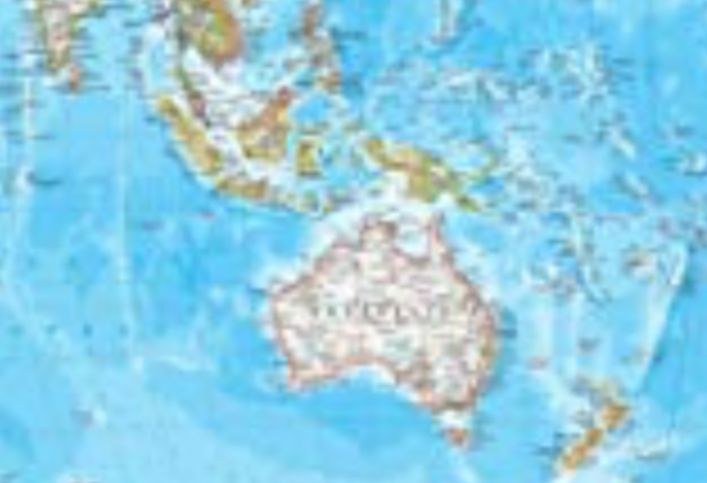
Australia is a distant landmass at the bottom of the world in the western Pacific. The next land mass to the south is Antarctica.
Australia-A very big island Anecdotally, Henry Kissinger is supposed to have replied to an invitation to visit by saying: “Very well. Next time I’m on my way to Antarctica, I’ll be sure to drop in.”
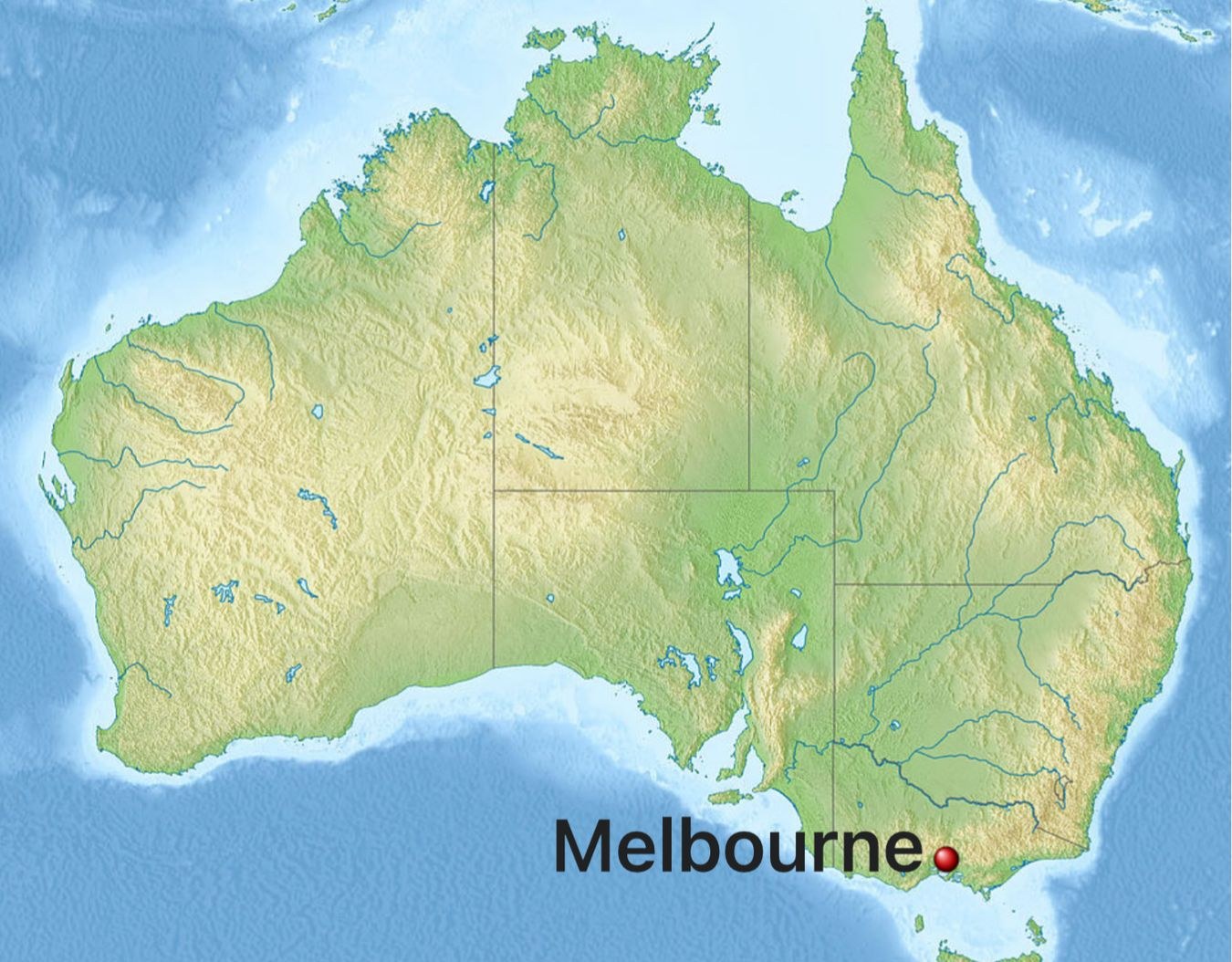
BHP is headquartered at the bottom of Australia in Melbourne, further adding to the sense of isolation when you are there. In the not-too-distant past it used to be said of Irish emigrés to Australia that, due to its remoteness and location so far away, they would be gone forever and would never be back.
In the summer of 1994, although I had accepted the BHP job, I did not go there straight away. We had previously planned to have a family sailing holiday in Turkey with Rob Cornish and his family in August so that’s what we did. We had started these Turkish sailing adventures some years previously, when Rob had three yachts in Turkey and he needed some of his friends to charter them to offset some of the costs. There were a variety of yachts on these annual regattas as different families came and went. But there were always other kids for ours to socialize with and have lots of fun swimming and diving and maybe having a few beers now and then. One of the many memorable quotes came after all the kids had a particularly celebratory night, when the Turkish barman at the anchorage told us adults in the morning that “the children have eaten too much beer last night!” These sailing holidays were great adventures in a part of Turkey that at that time was only accessible by boat and so was unspoiled. We snorkeled over mosaic floors of sunken Roman towns, clambered among Lycian rock tombs, explored Crusader castles and even visited Myra where St Nicholas (the origin of Santa Claus) was the bishop.
Joining BHP was a wrenching change. I was heading to a company and a country that I knew nothing about. Previous country moves always came with the knowledge that Mobil would have confidence-building guard rails in place tied to familiar processes and people. None of this awaited in BHP. And although I had generally travelled to new Mobil appointments ahead of the family and then scouted out housing and schooling, in this case, although we did discuss the family moving to Australia, it was agreed that this might be a family move too many.
In 1994 BHP (Broken Hill Proprietary) comprised three divisions, Mining, Steel and Petroleum. Broken Hill was the original company and was named after the site of a 19th-century silver-mining boom town. This division had morphed over time into a big copper, coal and iron ore miner. When the silver ore started to play out in the 1910s, the company diversified into steel manufacture. Finally, in the Bass Strait between Victoria and Tasmania, BHP’s partner Exxon found oil and gas in very large quantities and commenced production in 1969. As a result of this resource wealth, BHP dominated Australian business and indeed comprised a whopping 14% of the Australian stock market. By comparison, in 2024, Microsoft is the largest stock on the S&P 500 with 6.8%. However, the BHP share price had been moving sideways for quite some time and investors were getting impatient to see some improvement in the value of their investments.
BHP Petroleum (BHPP), as the oil and gas division was called, was located in an office building of its own, separate from the company’s executive management. In fact, the organization, and its people were viewed with some suspicion by the more traditional people in the other two divisions. Because there had been no history of oil production in Australia, and the Bass Strait operation was staffed by Exxon people, the great majority of Petroleum’s workforce in the Melbourne office had been recruited in the UK.
The portfolio of properties consisted mostly of smaller oil fields, with some in the UK North Sea, some in the US Gulf of Mexico, a few off the NW coast of Australia and one contentious one in Vietnam. One of the better assets was a quarter share in the LNG plant in the northwest Shelf and this together with the 50% share of the Bass Strait provided a solid foundation. Strangely enough, the company also owned an oil refinery near Honolulu and the company which provided gasoline and natural gas to the Hawaiian island of Oahu.
The three years I spent with BHPP were a seminal time. Being able to operate without the checks and balances that were controls in Mobil was liberating. I didn’t really have a boss because the BHP CEO had a steel business, industrial relations background and knew nothing of the oil business. The Petroleum employees were disheartened by the inadequate leadership they had experienced and the business was fading. I basically did triage on the workforce, firing the duds, promoting the good performers, and bringing in skilled people from abroad. Then, over time, I did the same thing with the petroleum assets. This is easier said than done, and probably took around two years.
Of course there were lots of challenging/interesting events along the way, some of which are sketched here. Starting in January 1994 I attended the World Economic Forum in Davos, Switzerland, in January, for three years in a row. One of those times I met the two Enron senior execs Ken Lay (the boss, who died prematurely after being accused of running a fraudulent business) and Rebecca Mark, their ruthless negotiator. The venue also served as a good place to meet senior Iranians and Russians in the oil business. Another time I flew to Denver to fire two senior Americans on the BHP payroll who clearly had been overpaid for an extended period despite contributing nothing to the petroleum business.
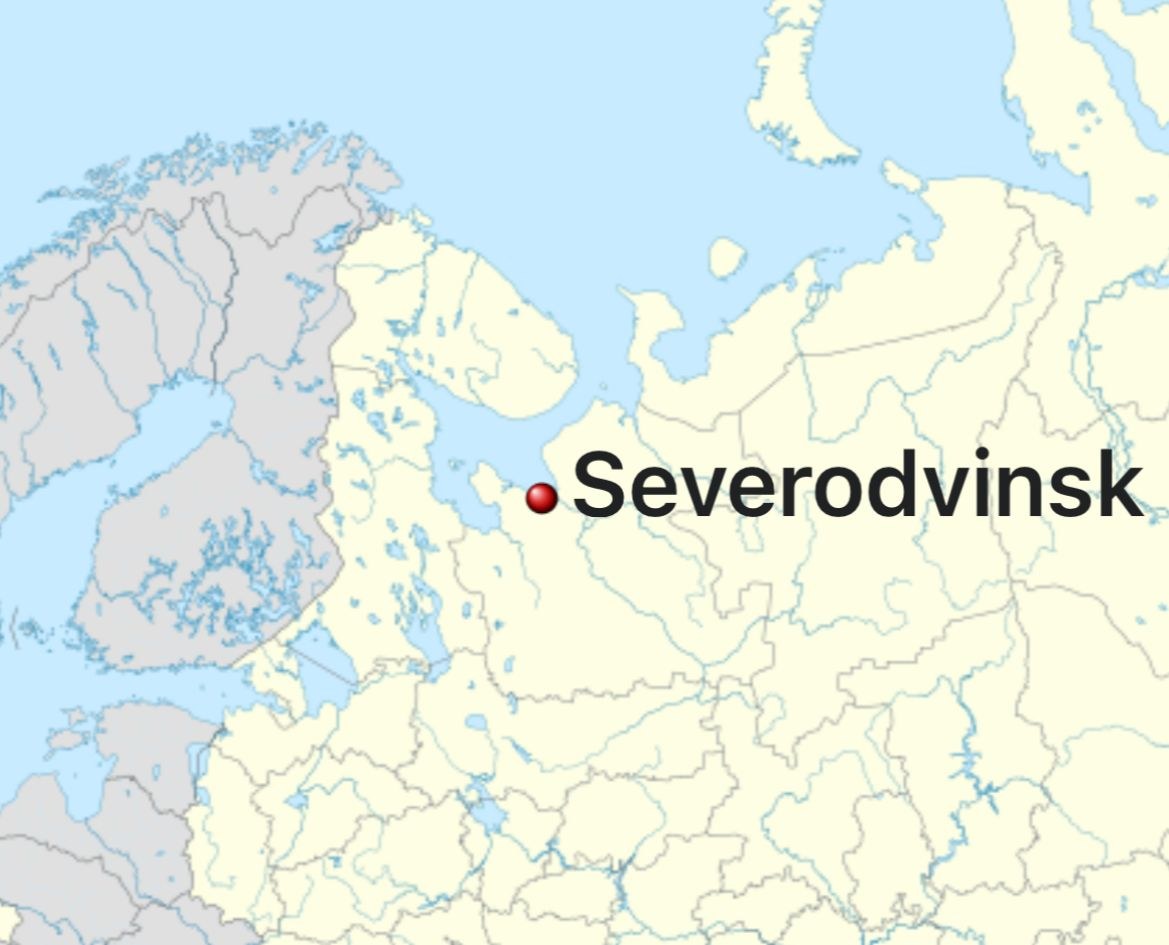
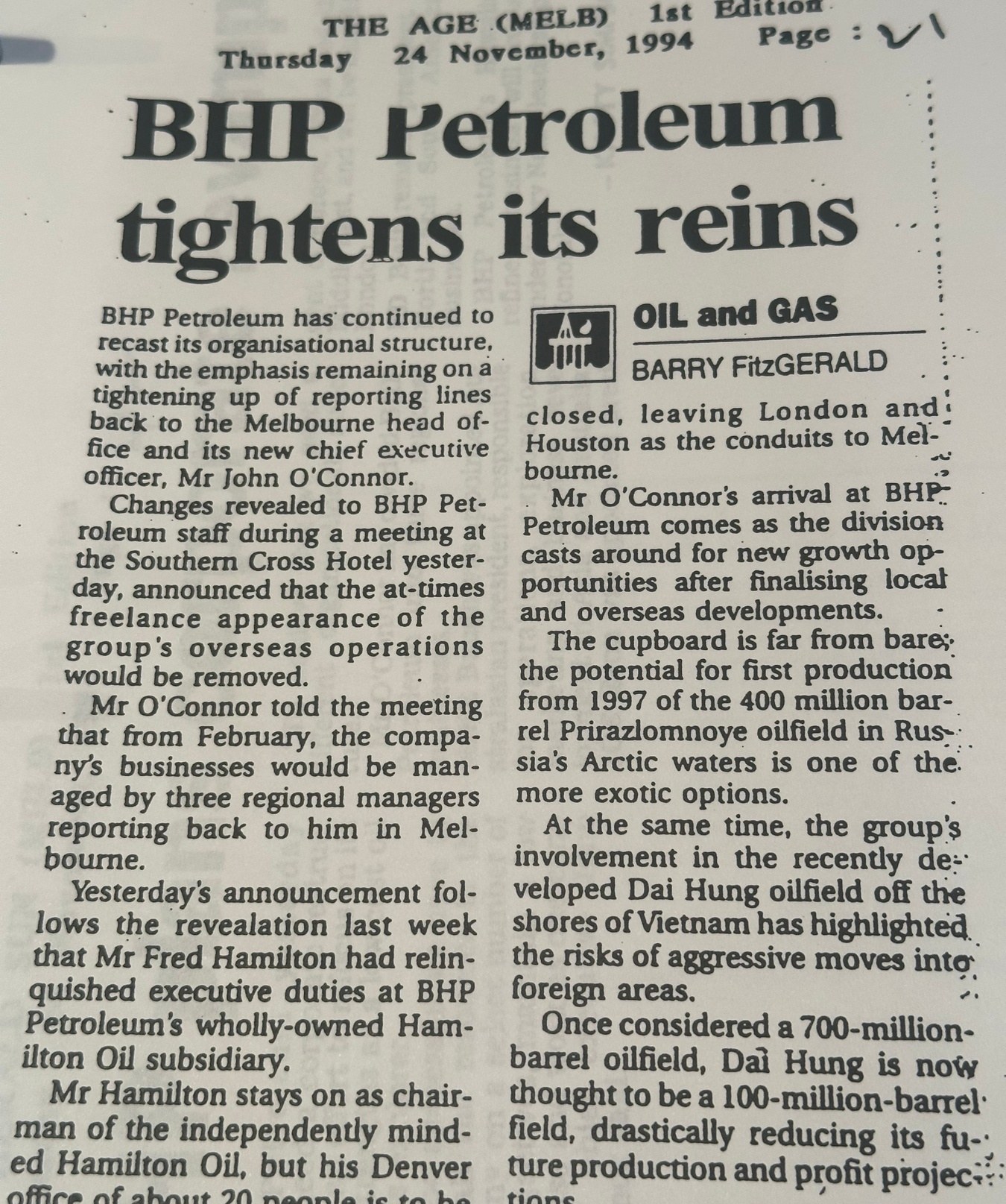
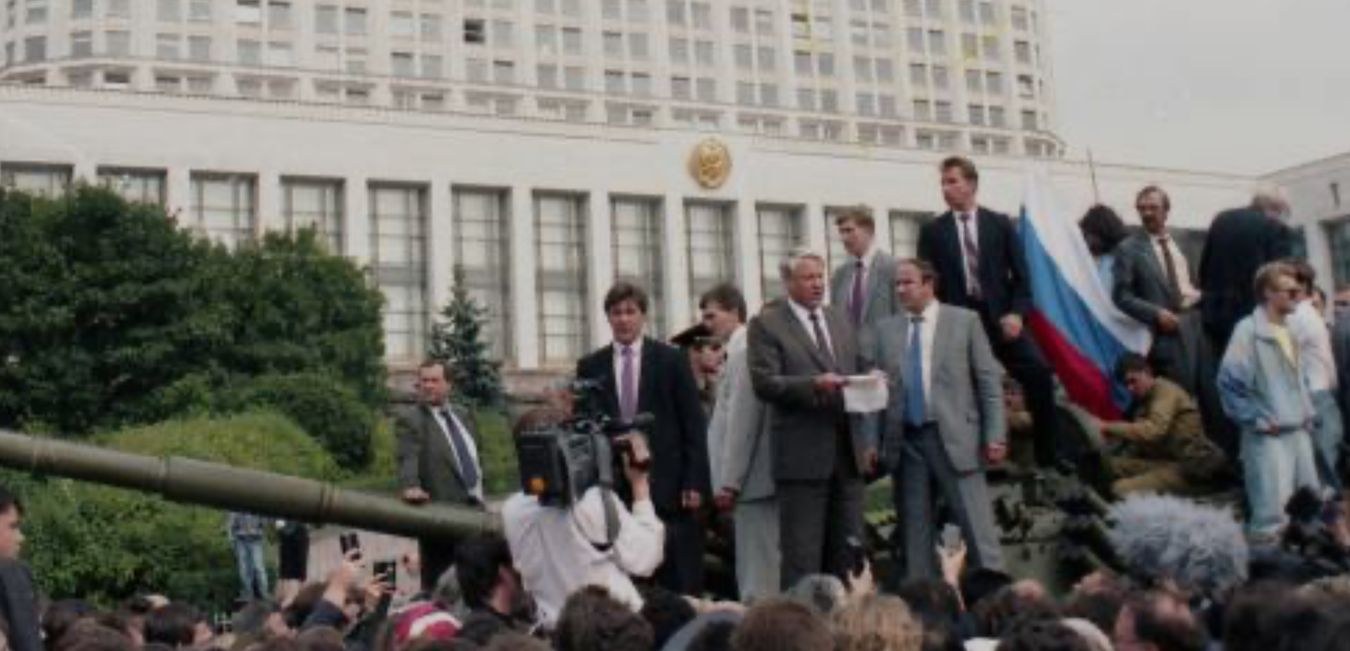
Then, in December 1995, I was essentially forced by the Yeltsin administration to go to Russia for a “special occasion.” BHP had been in negotiations for an offshore oil development called Prirazlomnoye for some time, which I inherited. Because it was a “hurry-up” job and I had no winter clothes (it was high summer in Melbourne), I was frozen in both Moscow and Severodvinsk, which turned out to be my ultimate destination. This city is access-restricted for foreigners due to the presence of important military shipyards, but from Moscow I was flying on a Russian government executive jet (or their rather shoddy version, a Yak 40) and so was welcomed.
This truly whirlwind visit took me completely unaware and without any BHPP support. It included an offshore trip in a Russian helicopter (totally unsafe and even more so when the pilots got lost offshore in fog) and being paraded on a stage in a mega-Dickensian shipyard in front of a large workforce, with a sash sporting some Cyrillic writing thrown around me. It turned out that the yard was off limits to foreigners (it constructed nuclear submarines.) There was an election for the Russian Duma, and I was being paraded in support of Yeltsin’s party (which I learned later was what the sash said) with the promise that I would commission an offshore oil production platform thus keeping the shipyard workers employed. I even got to strike an electric welding arc on a titanium plate which memorialized my visit.
I went to Islamabad in Pakistan and was shown on national TV in conversation with the President. In return I hosted the prime minister in Melbourne and had to ignore a blatant request for a big bribe. I visited Phnom Penh, Cambodia with Pierce, who was visiting Melbourne at the time, and met the notorious Hun Sen, the Prime Minister, who had an AK-47 on his desk when we met.
I pulled on Superman’s cape when I planted a story in the media suggesting that I was going to have BHP (the Big Australian) take over Exxon’s assets in the Bass Strait. The furious reaction from Exxon head office in the States was more than I had bargained for.
My predecessor had committed a large investment in an oilfield in Vietnam called Dai Hung and had promised investors that it was going to be huge. Unfortunately it continued to disappoint and I told the Board that we should exit the project and take the financial write-down. With their support I went to Hanoi and explained to a very angry Oil Minister that we would be leaving.
Because the Japanese utilities were such big customers for the LNG from the North West Shelf, I got to visit the various Japanese cities which purchased the gas (Tokyo, Osaka, Nagasaki, etc.) to cement the personal relationships. These trips were always a pleasure and a real insight into a very different social and business culture.
Throw in visits to our offices in London, Perth and Houston and oil facilities offshore Western Australia and there was not much time for routine working in Melbourne, although, as a Director, I had to attend monthly BHP Board meetings there and annual Shareholder Meetings in Sydney.
However, on the plus side, I did manage to be in Melbourne to see Tina Turner in an intimate concert setting and the Three Tenors in a very large cricket stadium.
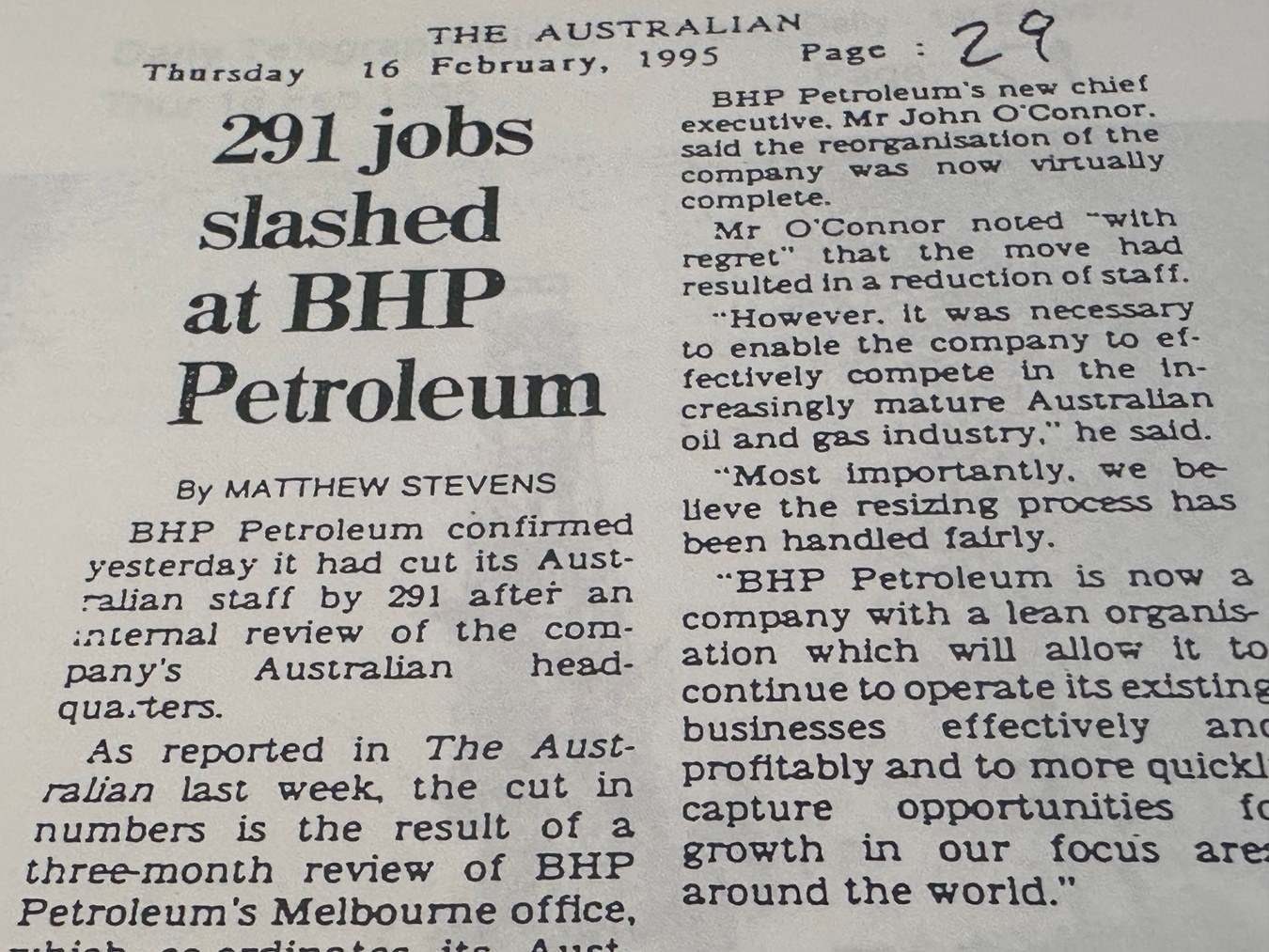
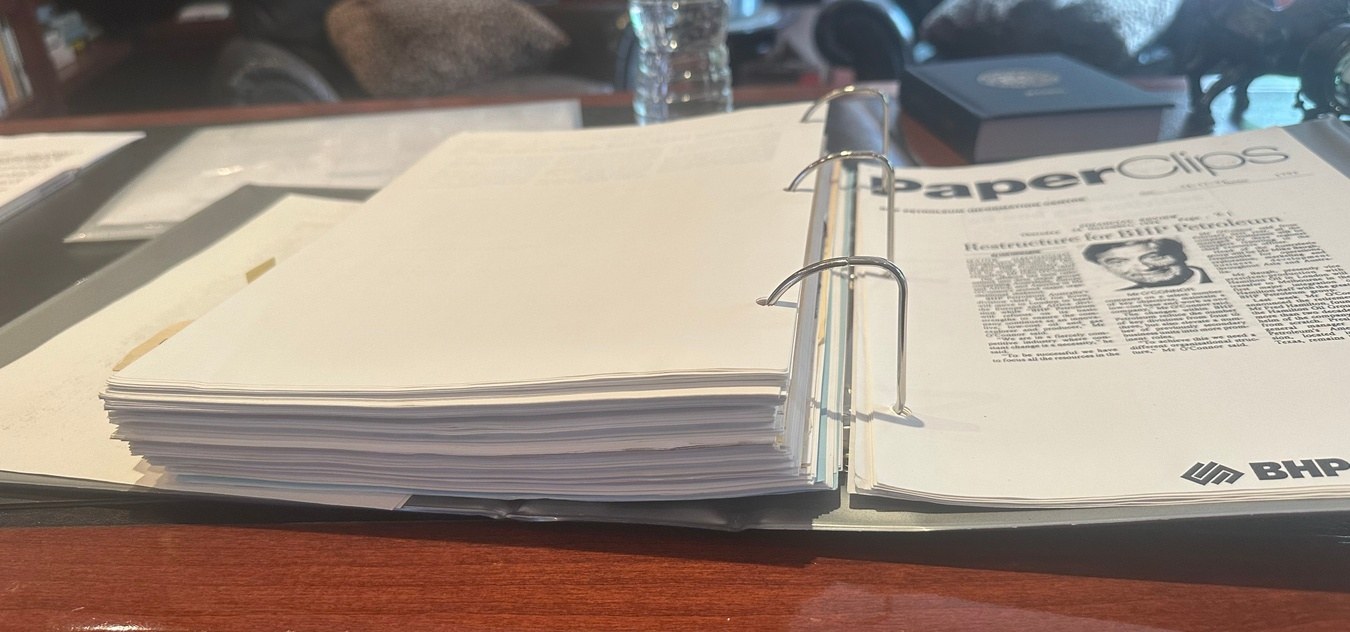
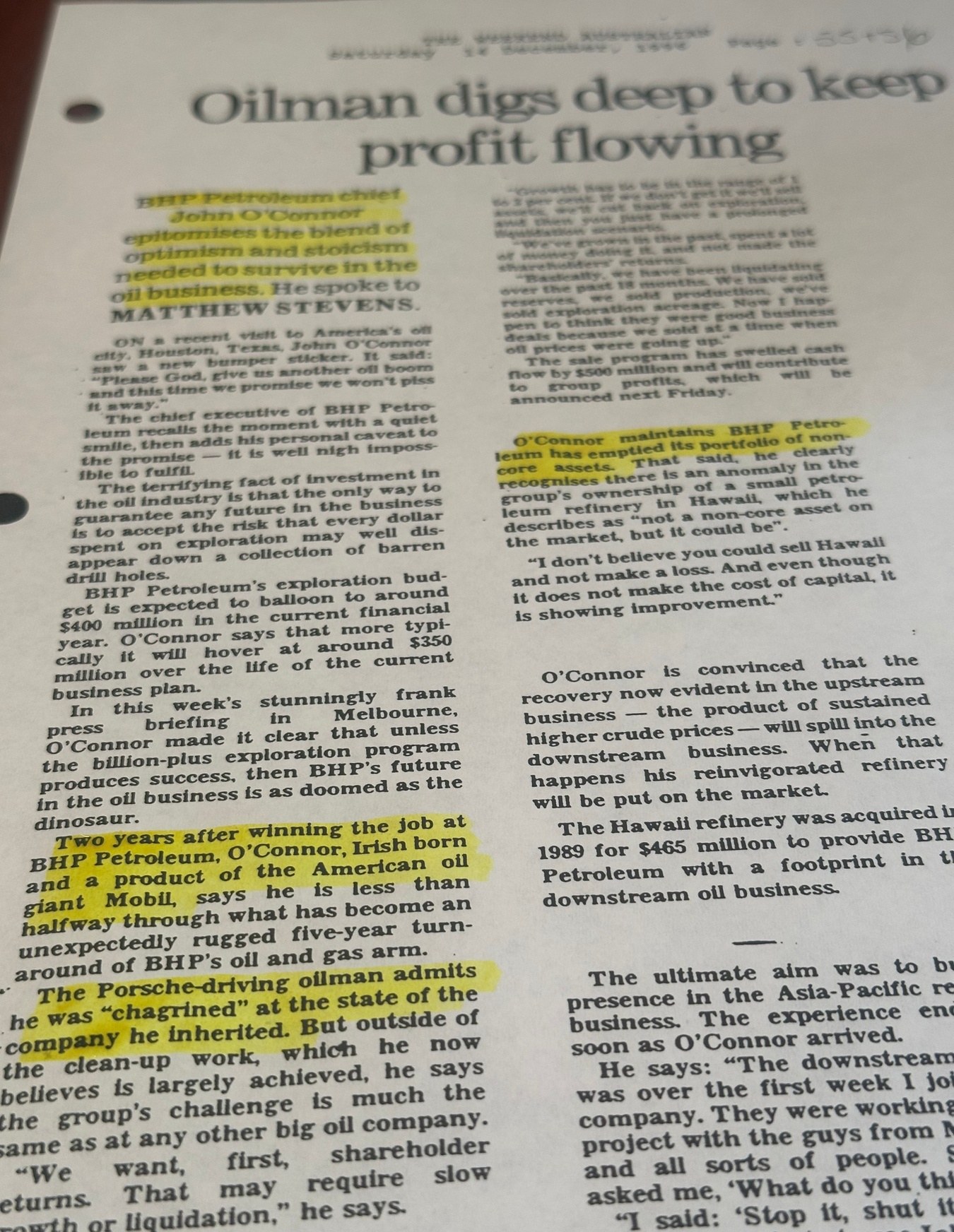
And now to address the media coverage I experienced! Long story short I must have been covered in all four national papers almost every day. The binder below is one of four similarly sized binders of press clips which have referenced me. Most of the coverage was due to the shake-up I was conducting in the Petroleum business, but some was related to my outspokenness, which was unusual in the strait-laced business environment of Australia at that time.
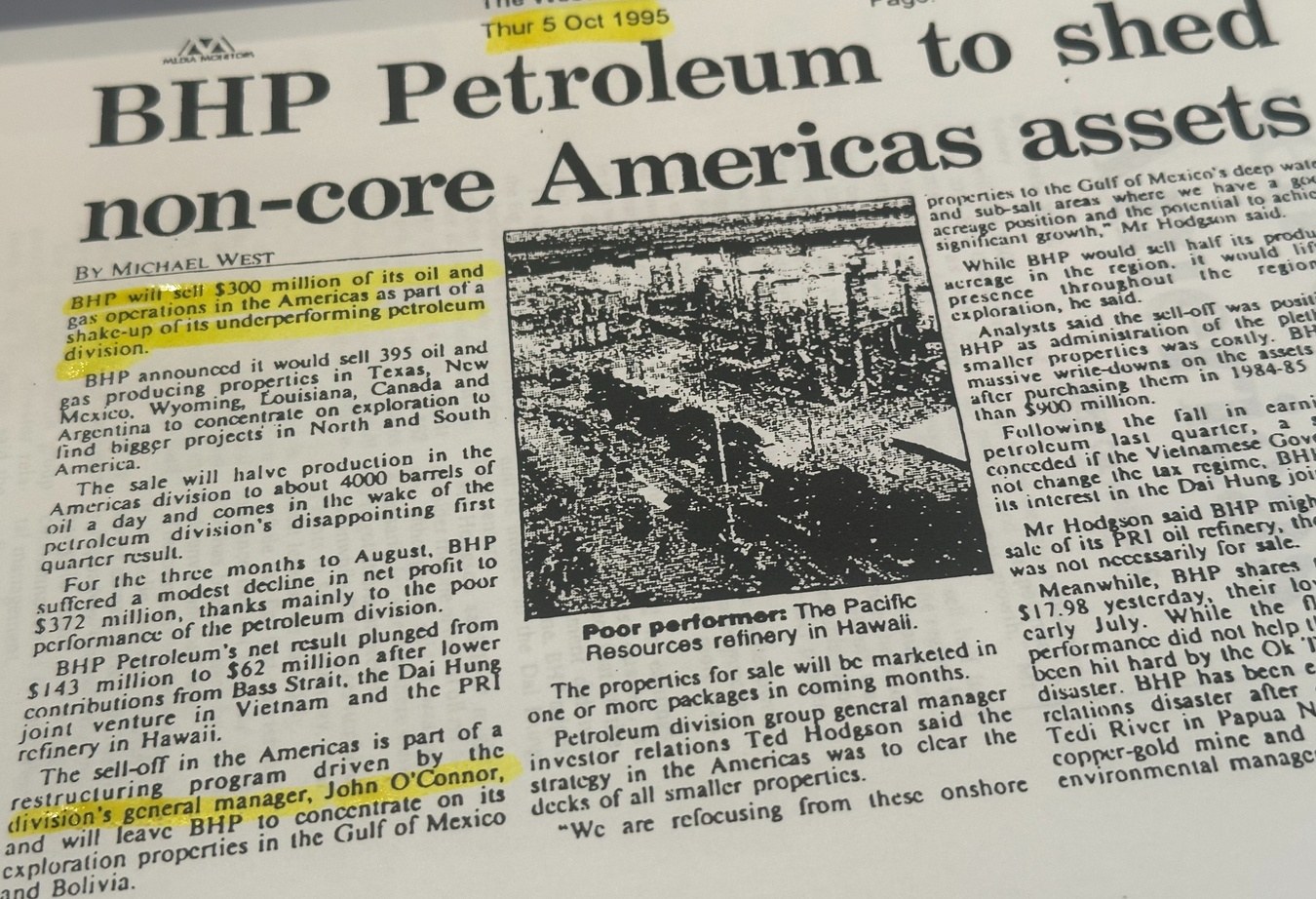
Every initiative of mine was covered including portfolio re-sizing after just two months in the job:Quick Action on Portfolio!
Of course the disposals needed to be balanced by acquiring new assets with real potential. One of the most important deals was the acquisition from BP of a half interest in some 100 exploration blocks in the Gulf of Mexico (GOM). Within a year or so we had the discovery of a major oil field. And the discoveries kept coming so that this GOM position was exceptionally important and profitable.
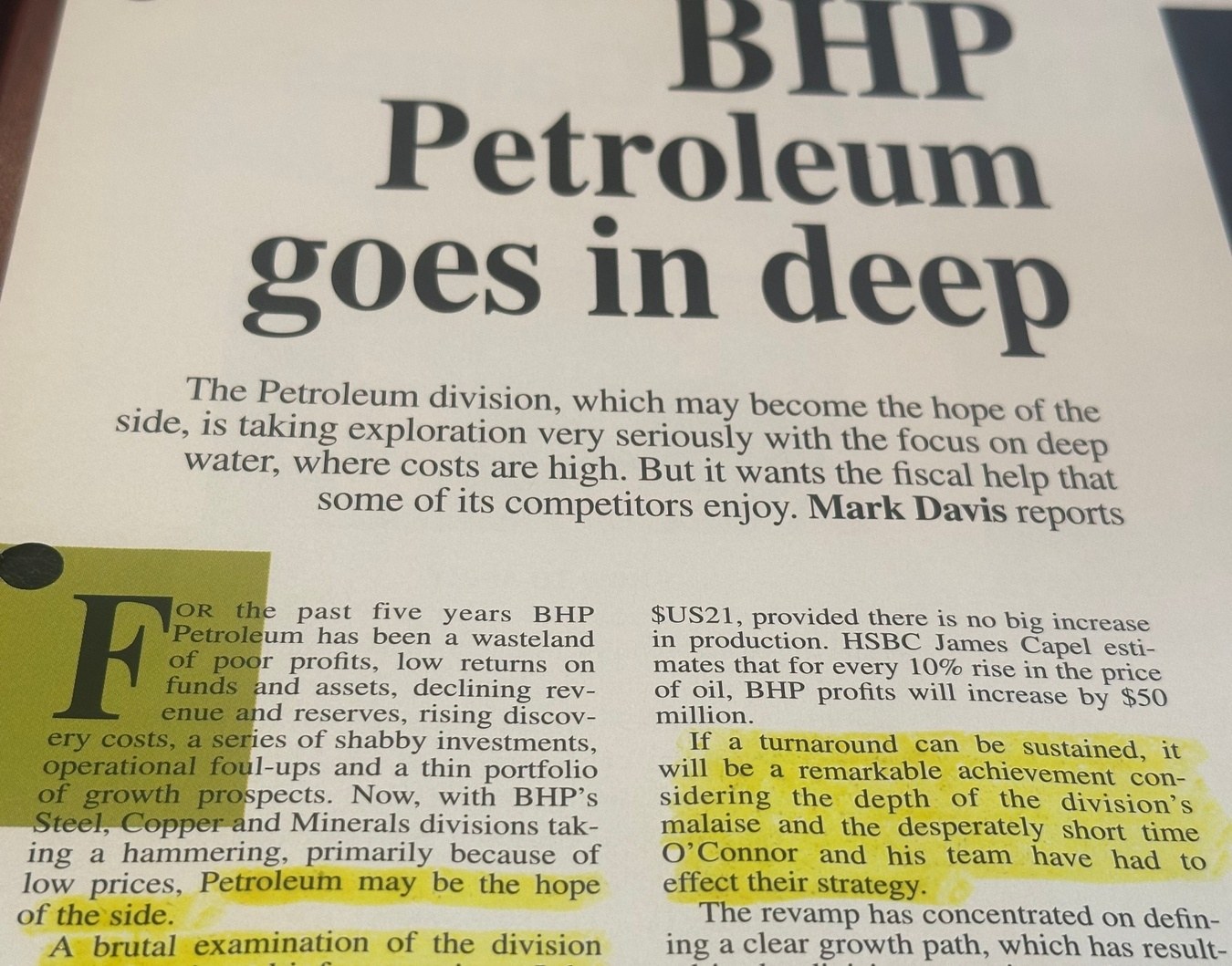
There had to be staff reductions too; Now BHPP was in shape After two years, by October 1996, the hard work was beginning to pay off, and the Petroleum business was viewed by the investment community as being the salvation of the entire BHP corporation! , And I was the epitome of Corporate Man who had arrived from the US and was delivering much needed change; October 1996 And I rounded out the year; December 1996 Importantly, the investment community had become a supporter of the Petroleum division and enjoyed the open, honest briefings I gave them. One newspaper seemed to think that I was maybe like Godzilla around BHP’s corporate HQ office building!
And of course the Petroleum division employees were delighted with how the business was performing; they had tremendous morale and just as importantly enjoyed the recognition and the financial bonuses that they were finally earning.
Perhaps it was just as well that the business was now successful because around this time (maybe in January 1997) I was in a car crash. I had flown back to Melbourne in seat 1A on Qantas’ 747, beside Pete Sampras in seat 1B. He never stirred for the entire 13-hour flight! Even though I was probably still tired, I had a few drinks at home and then took my Porsche 928 GT out for a run to the seaside. While going down a hill on a straight road, a taxi coming towards me turned right in front of me at an intersection and I T-boned him. Luckily no one was injured, but my car was a wreck. It was a company car and they, BHP, agreed to repair it but it took forever and never felt the same again.
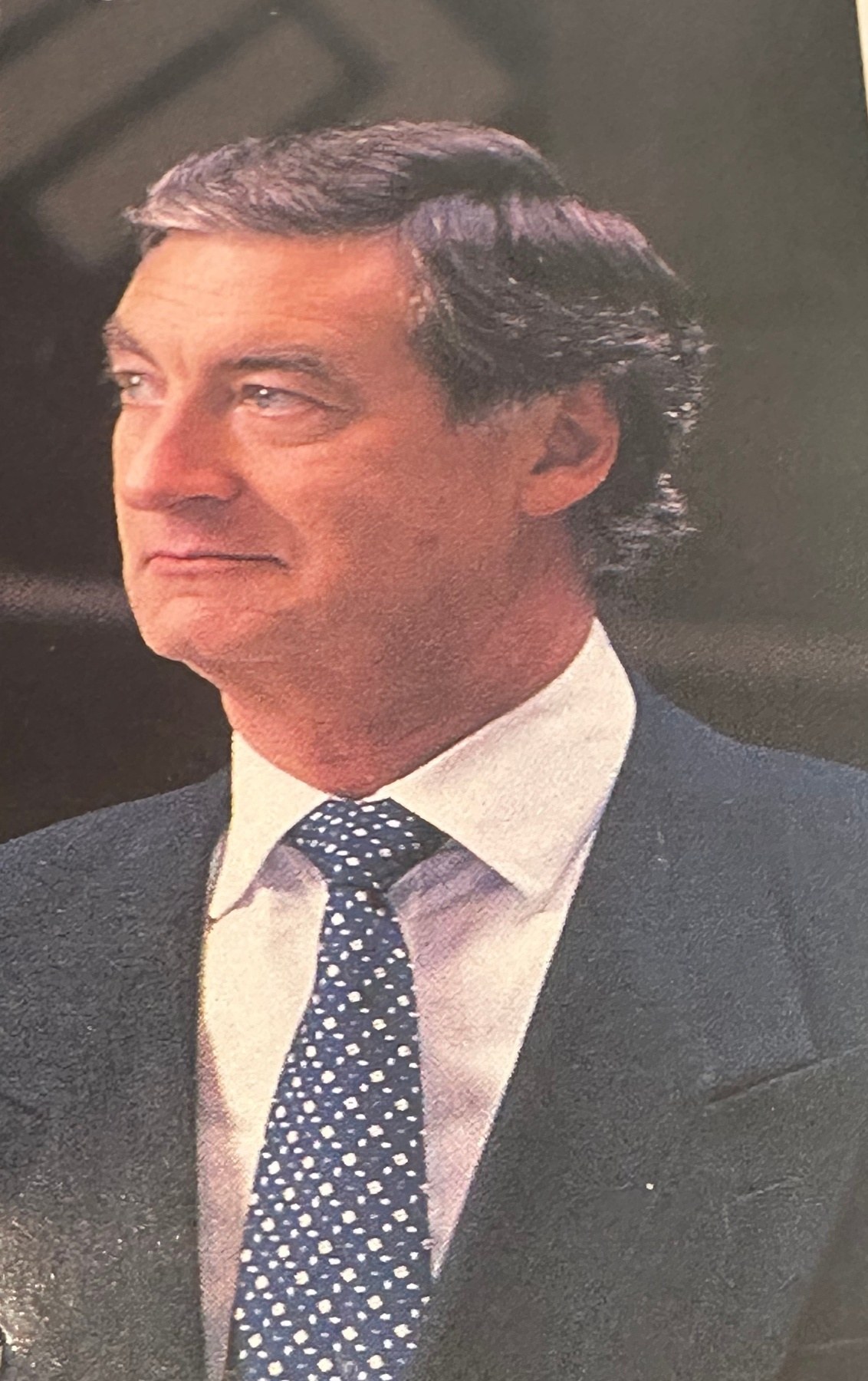
At BHPP we were continuing to seek new, impactful opportunities and were having some success, which involved me flying all around the world. To help with access to governments at the most senior levels we decided to try to hire Malcolm Rifkind, the former Foreign Minister of the UK. He had become unemployed when Tony Blair’s Labour party came to power in 1997. I interviewed Rifkind in the Savoy Hotel in London, and I’ve always been entertained by thinking about what my mother would have made of me, an Irish republican, deciding whether or not to hire an former minister of the Crown. I did, and he came out to Melbourne.He gave good speeches but no improved access to other governments! Another Tory grandee I spent time with was William Hague, leader of the Tory party and potential next Prime Minister of the UK. He spent the whole of a dinner evening quizzing me as to what the initiatives were that I employed to run an oil company. Hmm.
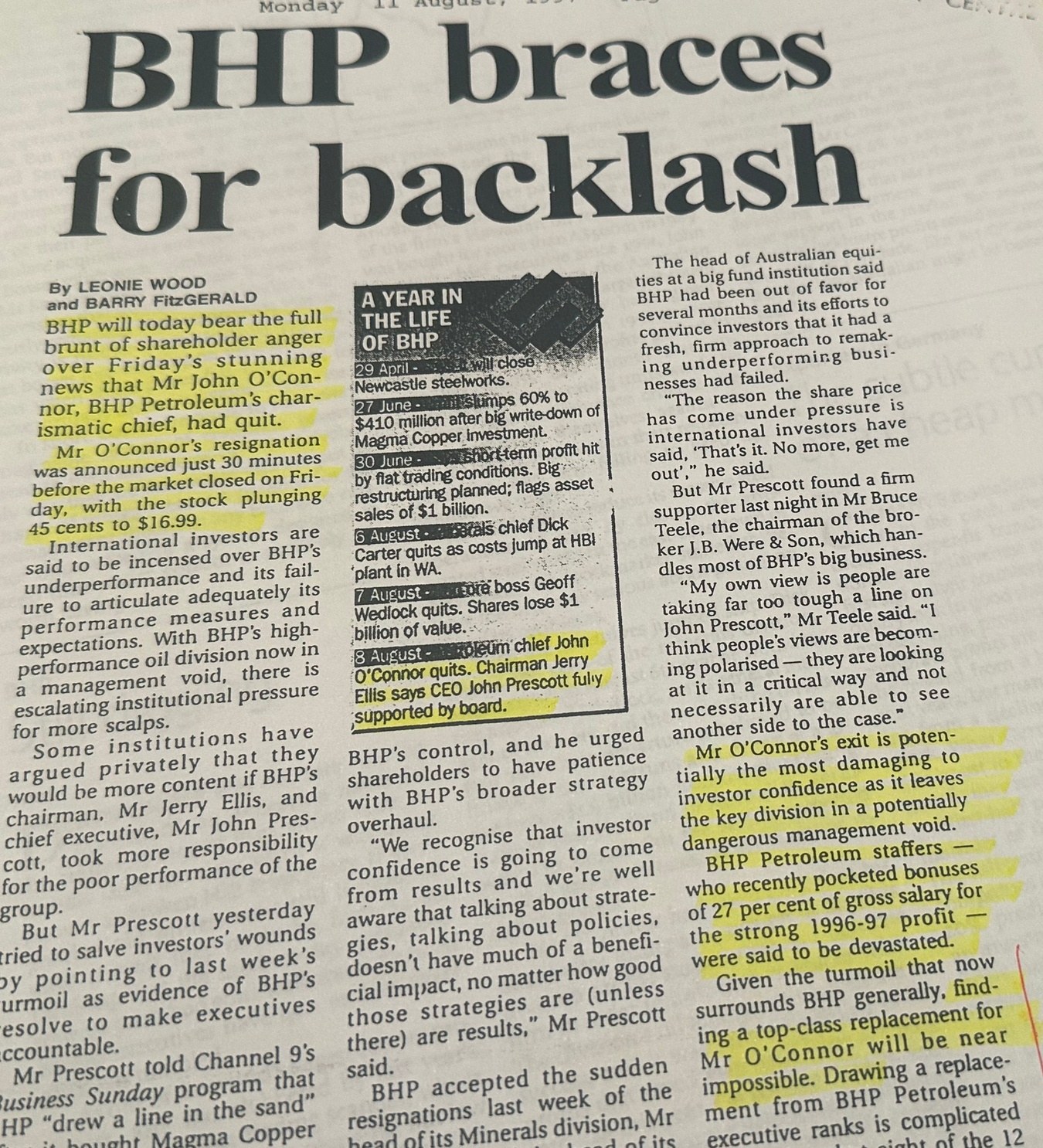
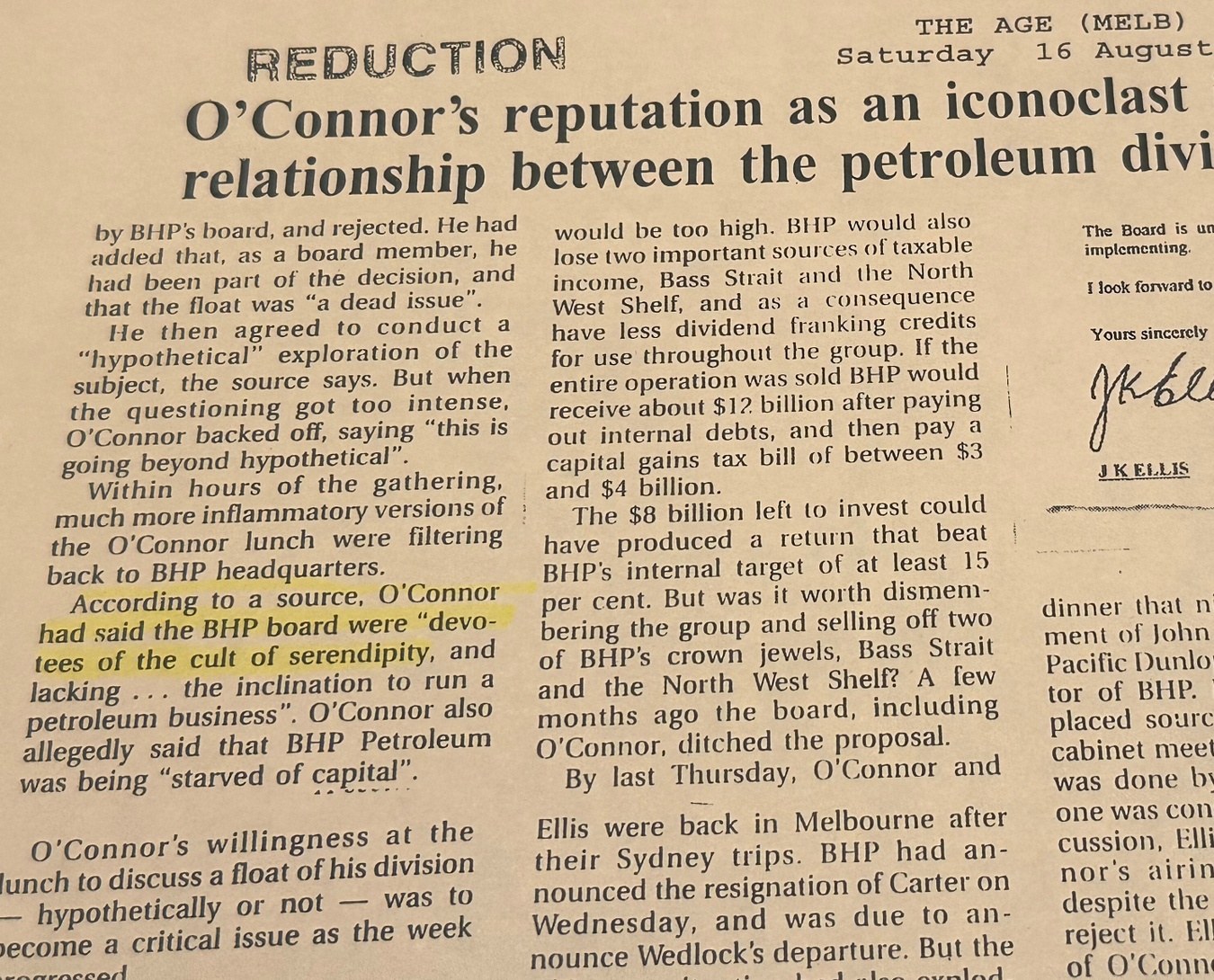
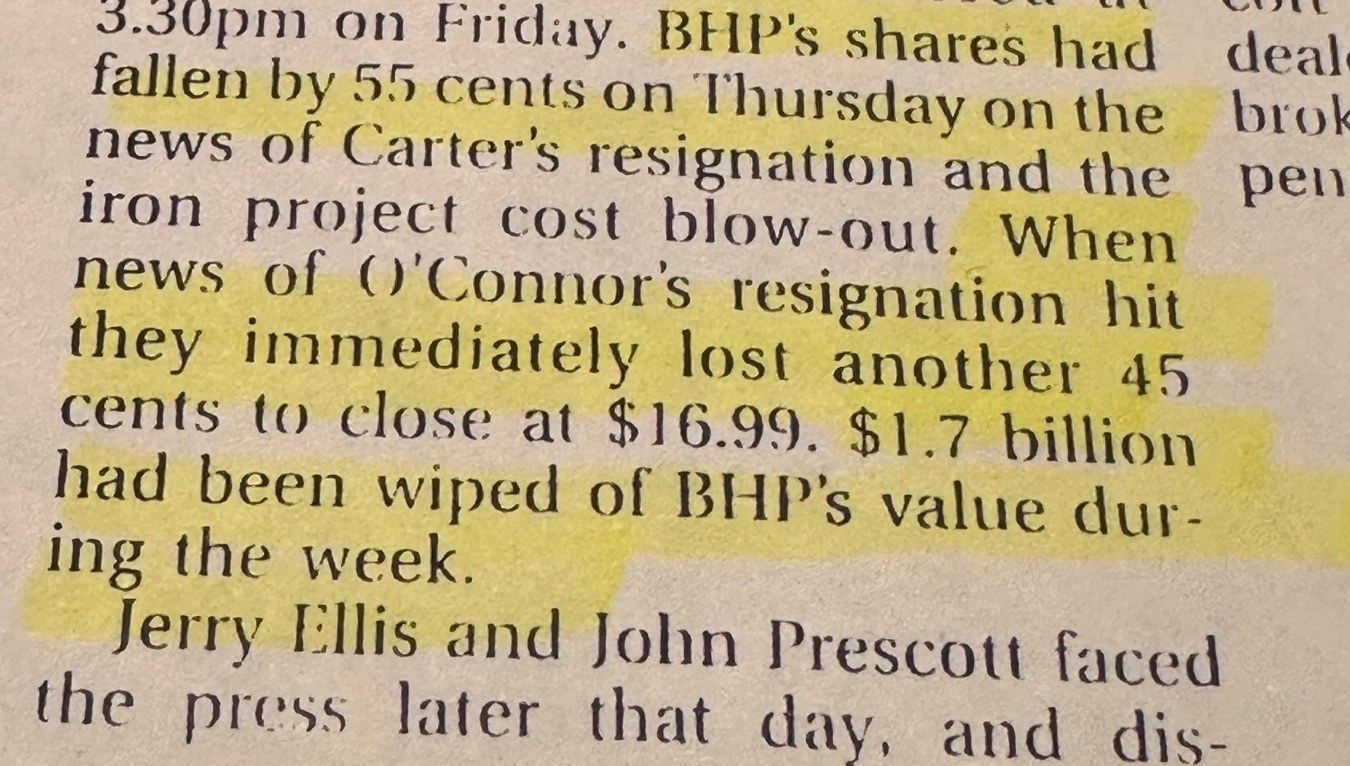
And then, everything came to an abrupt end! Very briefly, I was at a lunch for investment analysts in Sydney, ironically at the same time as the Chairman of BHP was in Sydney talking to the big investment houses about giving me a significant raise in compensation. I disparaged some of BHP’s board members for lack of relevant experience during what was supposed to be an off-the-record lunch. One of the analysts present broke the embargo, gave the story to the media, and then all hell broke loose.
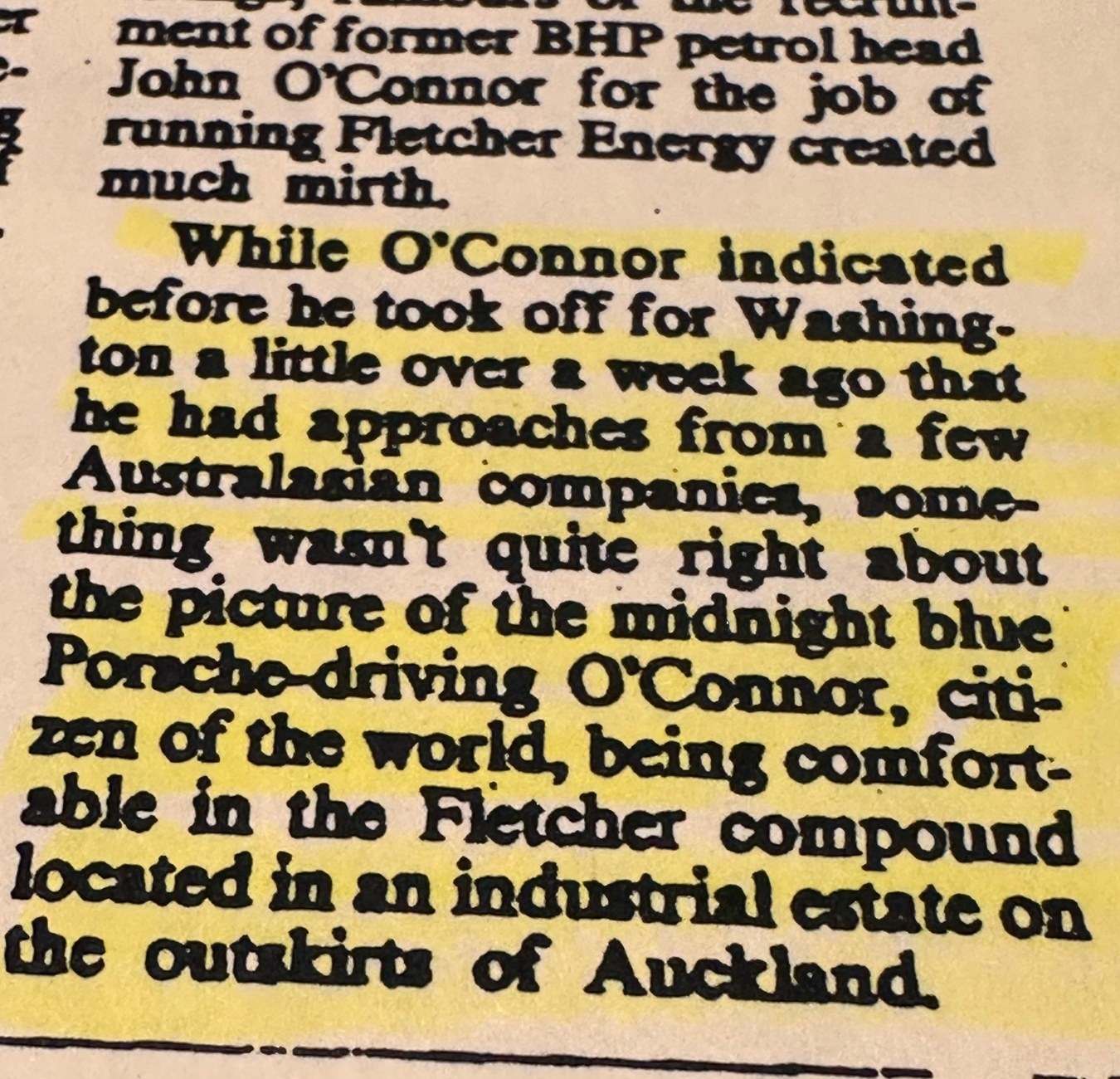
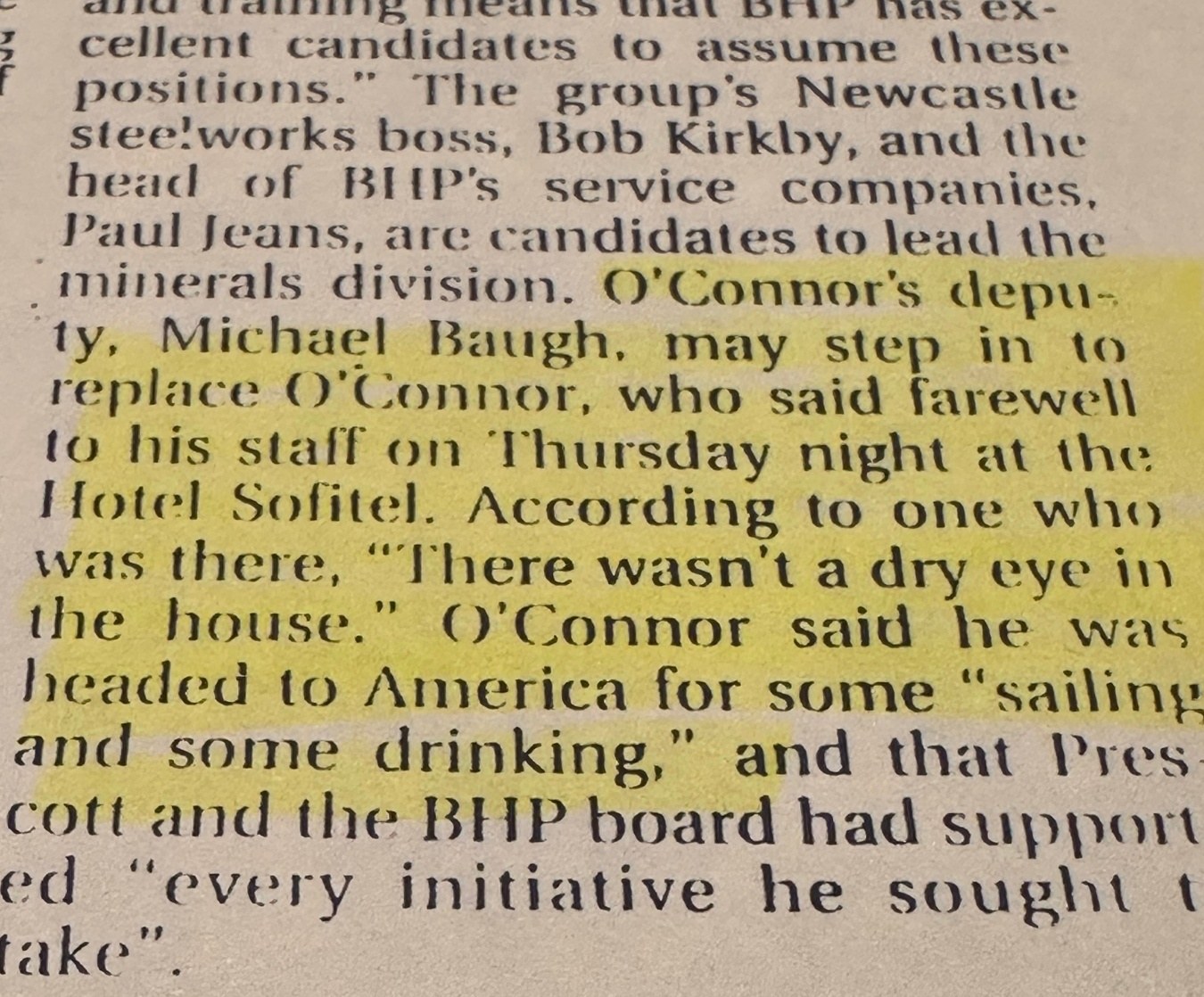
I’m just going to capture some of the media response below as the easiest way of telling the story. Very quickly the following day I was fired, the share price dropped, the Chairman and CEO went into public relations damage control and I said farewell to all that.
I had been fired on Friday, 8 August 1997 essentially three years to the day after I arrived in Melbourne. I rapidly packed up, said goodbye to the disillusioned employees at a large event in a hotel ballroom, held a long and memorable dinner with my direct reports and by the following week I had left Australia.
It is true that the Petroleum organization was very put out about me leaving. They had gone from demoralization to being the company’s heroes in less than three years.
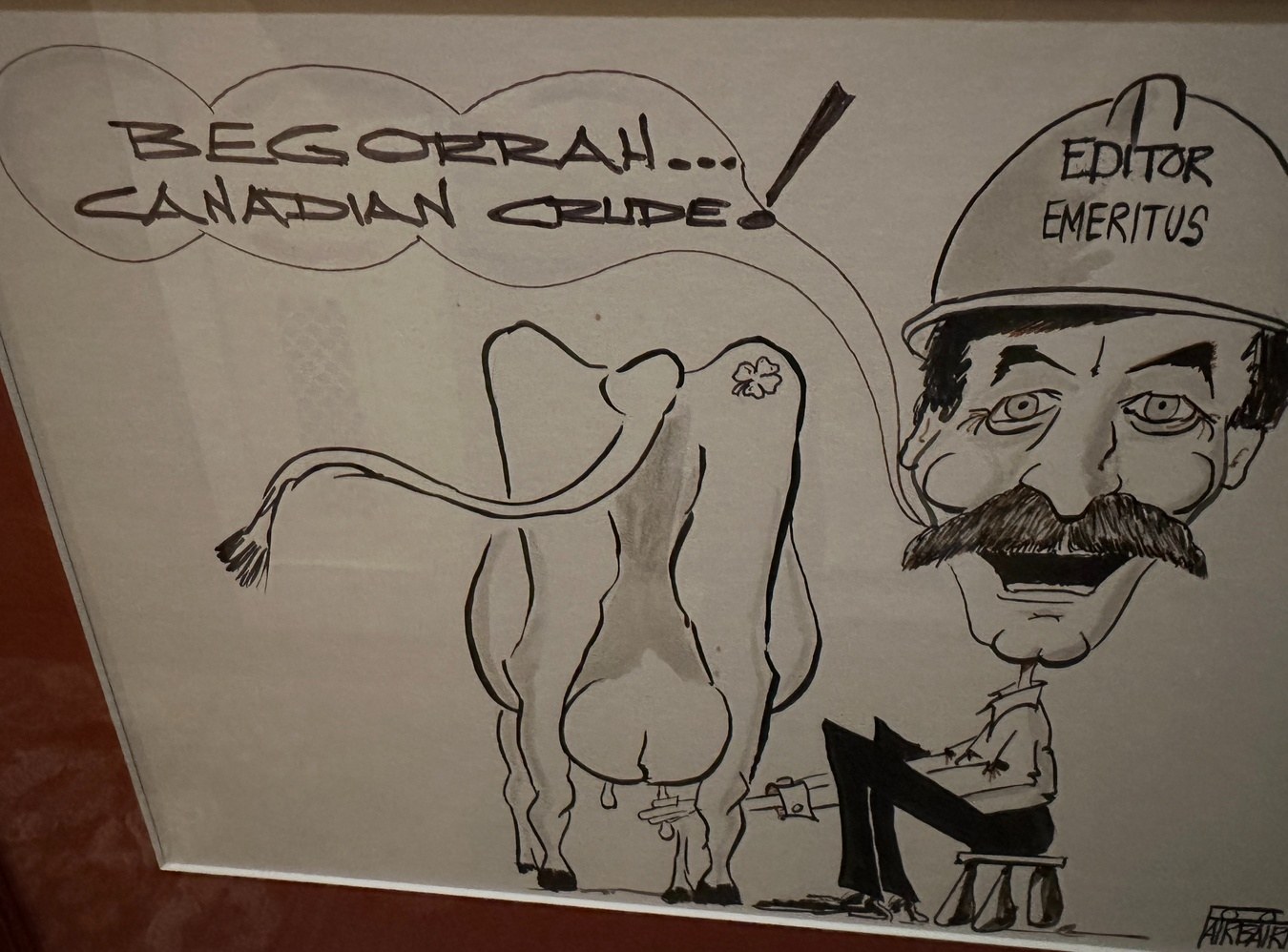
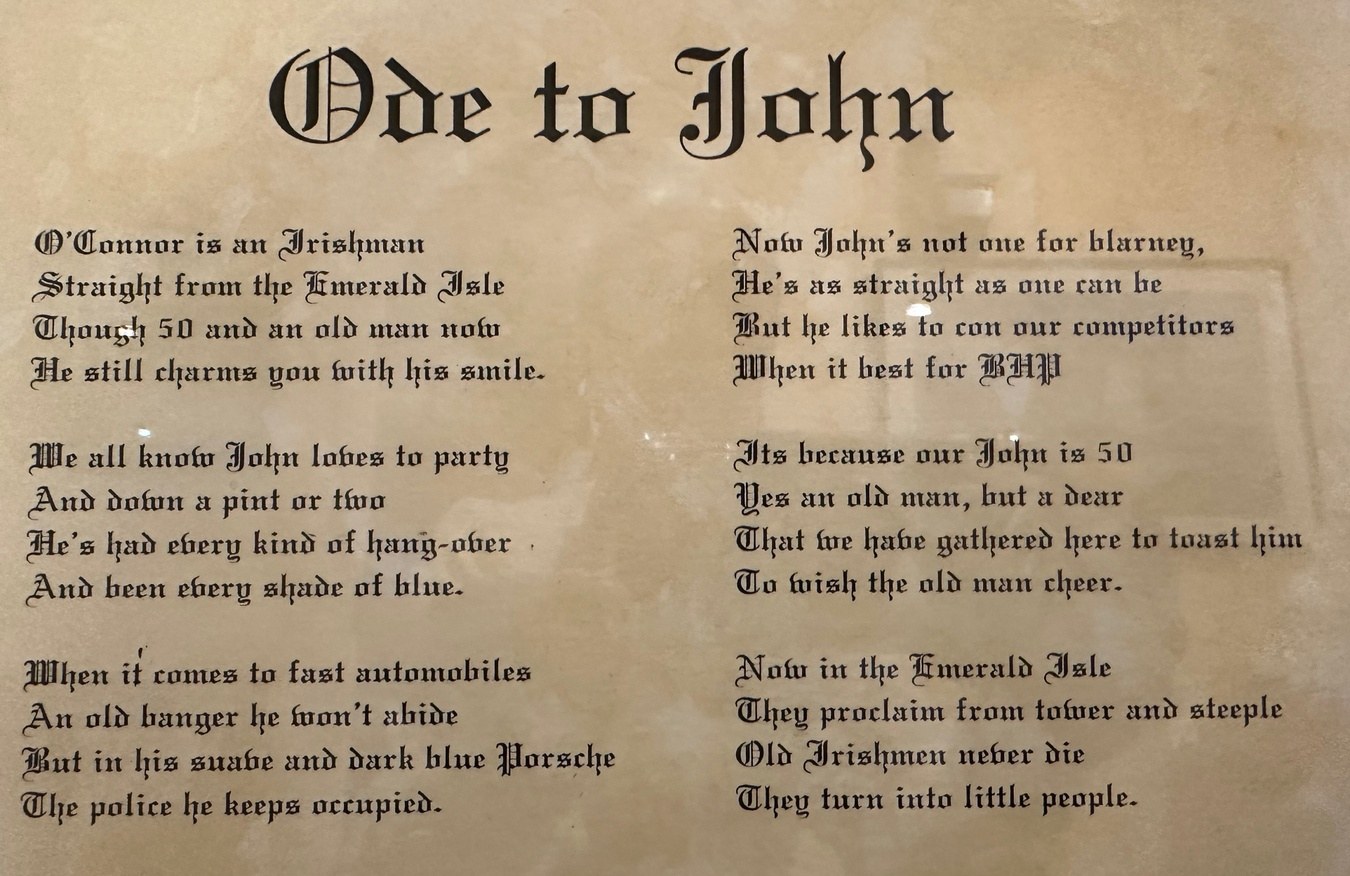
There were some well-meant mementos given to me on my departure; Heartfelt?
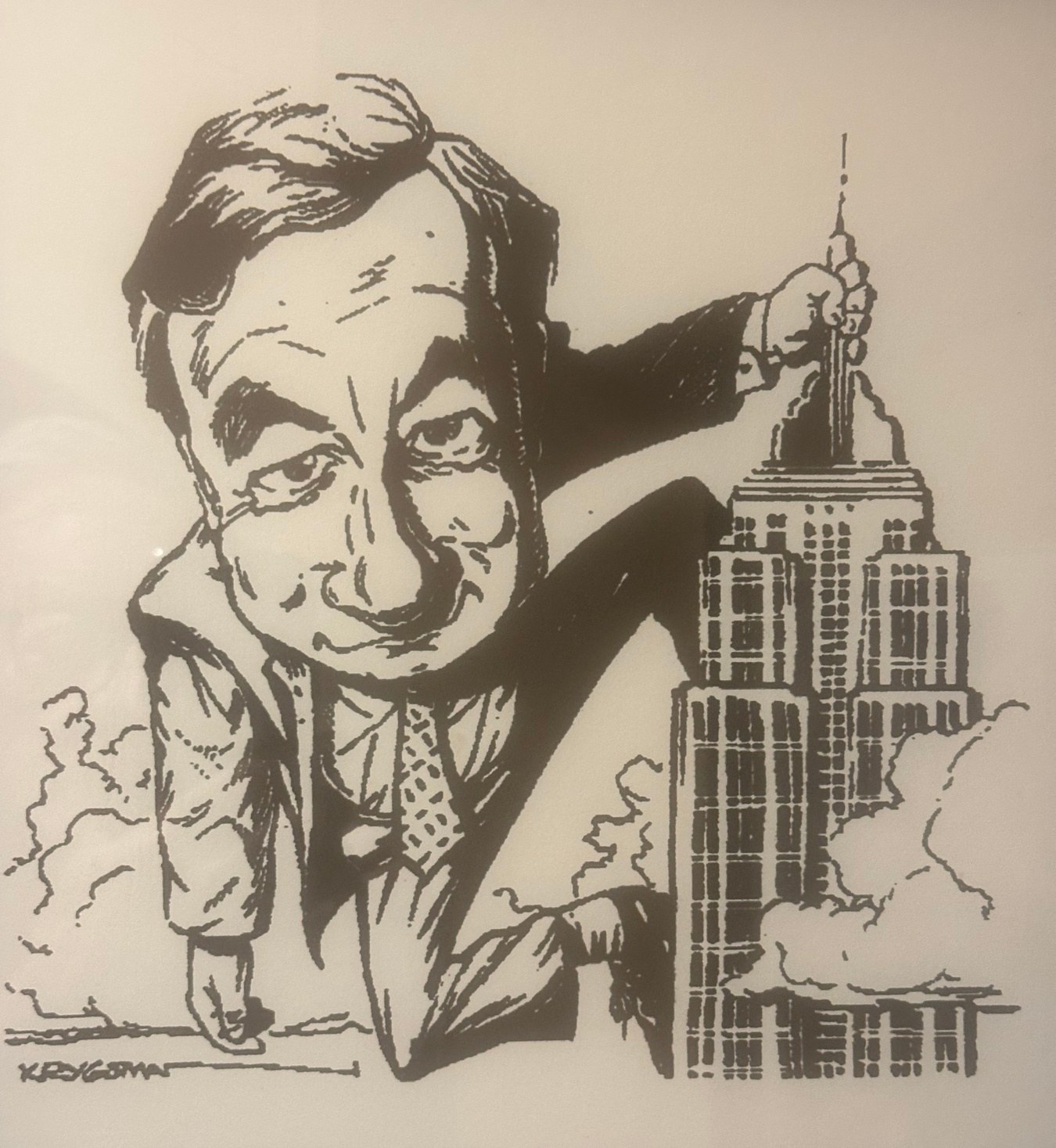
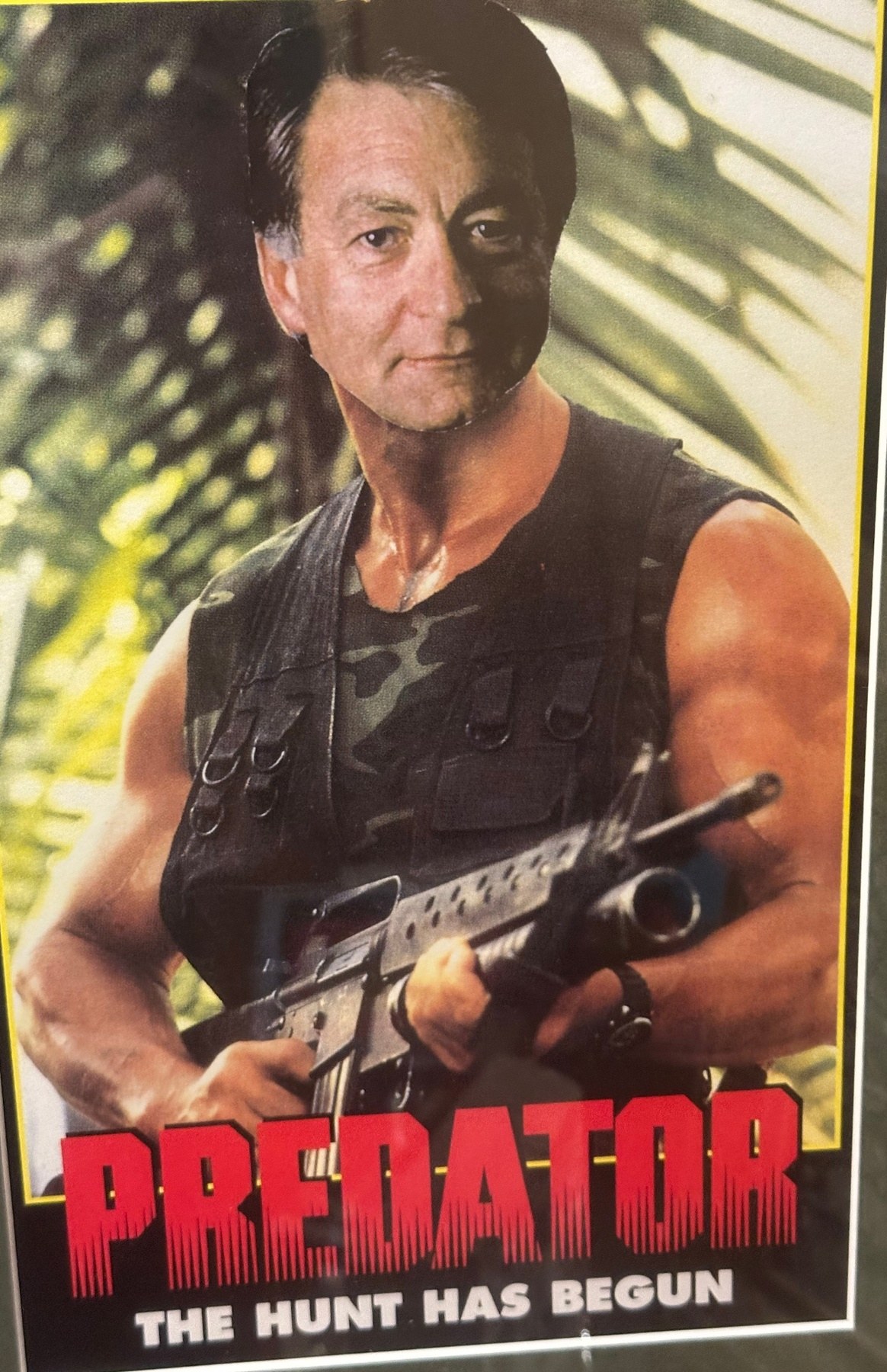
living in Ireland. I wanted to recruit him for an important job and having flown him to Melbourne I thought I’d impress him by taking him to BHP’s VIP box at the famous MCG grounds to see a cricket match. He was so bored by the lack of activity on the pitch that he nearly didn’t join us!This was another token, this time from the staff in the Drilling department. Does it allude to my agressive reshaping of the oil business? I never did find out.
I suppose the real coda to the BHPP sojourn was turning in a profit of some $700 million each of the last two years I was there. I thoroughly enjoyed being my own unfettered boss without the “safety net” that constrained risky initiatives in Mobil. It was also extremely satisfying to show to myself that I could make a difference to an oil company’s activities and profitability. This was bound to be an asset into the future.
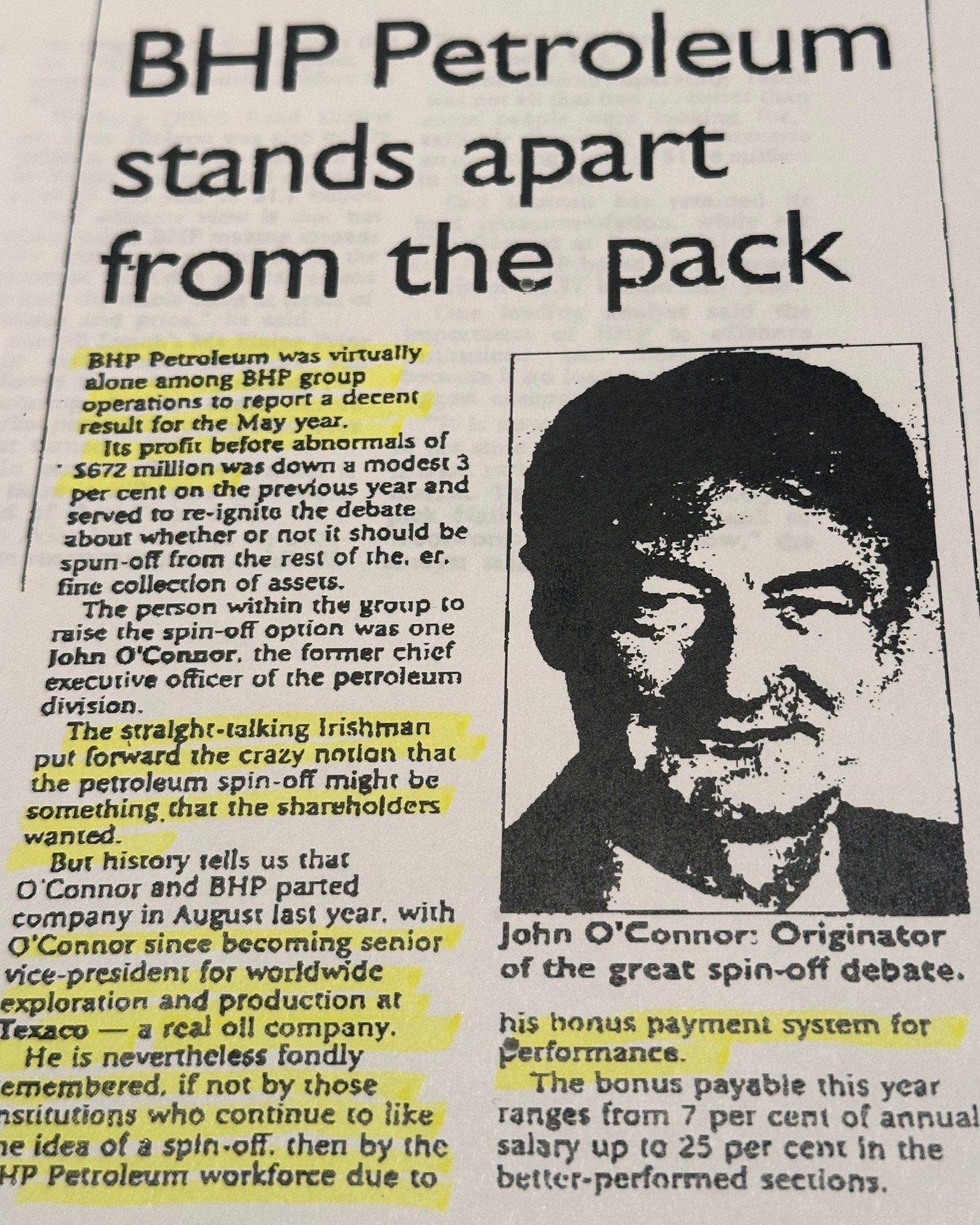
As the article opposite says, even a year after I had departed I was fondly remembered in Australia. But back in the USA I had no job. I did have an invitation from Robin West to go sailing with him in Maine, so that’s what I did as a way to decompress from the maelstrom I had just left. The future would just have to wait for a while.
Continue Reading
1997
Strange Approach
I n October 1997, refreshed after my sailing in Maine with Robin West and living in the McLean house, I received a call from someone I didn’t know and whose name I don’t remember. He wanted to discuss a job opportunity with me, which, given that I was unemployed, intrigued me. He didn’t share any details but said he…