My first memory connected to the Calgary move was when we were on the plane headed there and six-year-old Gavin asked plaintively whether Santa Claus would be able to find us in a new country!
I don’t remember where we stayed initially. I believe it was wintertime though, and any place subject to snow generally presents a miserable appearance between snowfalls. Calgary was no exception. Of course, it’s way out west in the foothills of the Rocky Mountains. The Bow River flows through it. It is mainly an oil and gas town though there is also a substantial ranching sector in the surrounding area. This has given birth to the Calgary Stampede, a rodeo held every summer. In Calgary during Stampede Week the CEOs of the oil companies actually work at pancake-making stands to serve the poorer members of the community. While making the pancakes at the Mobil stand I was amused to spot one old Chinese lady go around the block 3 times to get more of my delicious pancakes!!
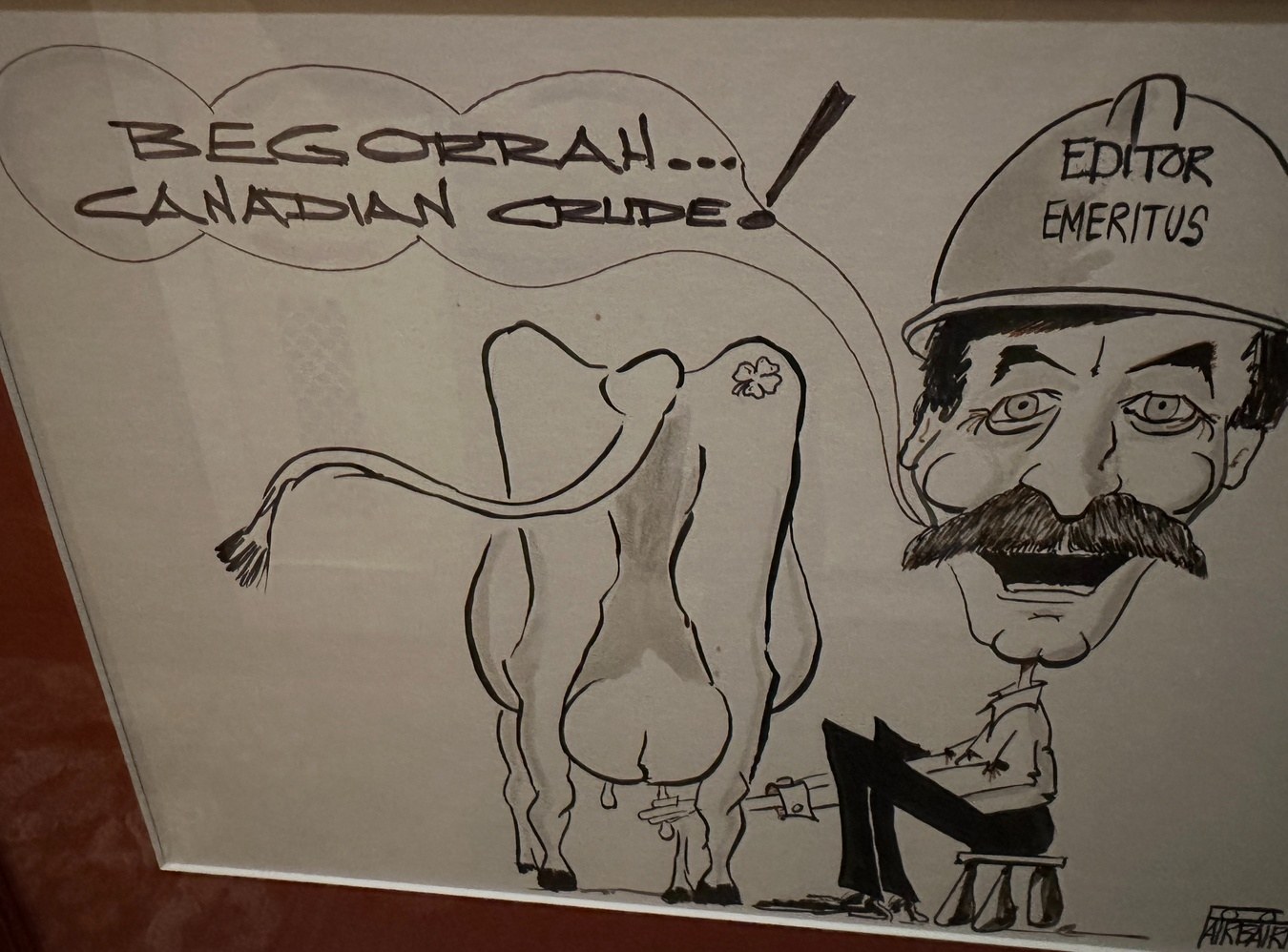
Mobil Oil Canada (shortened to MOCAN in Mobil jargon), had a strange and somewhat irregular corporate setup compared to the normal Mobil way of doing things. Because it was partially publicly owned in a nod to Canadian national sensitivities, the company had a chairman and CEO, and then a President and COO (Chief Operating Officer), which was me. Arne, the Canadian CEO, had a long and storied oilfield career. Initially he worked for Mobil as an explorer, reputedly responsible for discovering a number of oil fields in Canada. A smaller American oil company had some years before poached a number of key Mobil employees in both the US and Canada, including Arne. So, when Mobil bought the upstart company (retaliation?), they got most of their prior employees back! Of course I didn’t recognize it at the time, and Mobil HQ had to tread carefully around Arne because he was an icon in the Canadian business world (seats on the boards of the best companies etc.), but they wanted to retire Arne and put me in place as CEO.
I ran the Exploration and Production organizations and their ancillary staff while Arne took care of Finance, HR etc. This was actually very helpful for me. MOCAN was a big organization, which contributed some $160 million to Mobil’s annual bottom line and it took me a while to get my arms around it. The base business was in the older producing oil fields of Alberta and Saskatchewan while the future appeared to be in the Atlantic waters off Newfoundland where Mobil and its partners had a major discovery called Hibernia.
After a year or so NY HQ must have felt that I had a sufficient grip on the business and somehow “induced” Arne to retire and I became CEO. He was the most taciturn person I ever worked with and I don’t believe we ever exchanged more than a few words. I think my most cringe-worthy memory is of a dinner invitation to his house. He had just finished construction of a double-sized house and Liz and I arrived assuming we would meet some other guests. But no, apart from Arne and his wife, we were the only ones. I’m sure we went through the whole evening having spoken the fewest words ever between 4 people over a three-hour period. Dreadful.
Our life in Calgary was perfectly reasonable. We did buy a nice house, though now the hassle arose because I was an “American” in an “overseas” post and so was supposed to rent rather than buy. I worked around that by accepting any loss on later sale for my own account. I had a company car with a mobile phone of some sort (in 1989!). It also had a wire dangling out of the front which enabled you to plug the car into power outlets that lined the footpath’s edges downtown during the coldest times to keep the engine oil from freezing! Interestingly, because Calgary’s location is shielded by the Rockies from the prevailing westerlies, the fiercest winter cold was only intermittent rather than continuous through the winter. But I do remember giant ice blocks trapped in the Bow River when it completely froze over.
The kids went to what was an inner city school which had a mixed student population with a scattering of economically disadvantaged pupils. This was chosen to counteract the possible sense of privilege resulting from their schooling to date.
Probably good societally, but less so educationally. They did make some really good friends there though. Liz also had an Irish friend who was married to a Chinese doctor (RCSI grad maybe?) and who lived around the corner. We also did meet socially with some of the business people in Calgary which included some Irish professionals.
From where we lived we could look out an upstairs window and see the Rockies and the ski slopes, so we sort of got into the habit at weekends of gauging the snow quality and then, when snow conditions were good, saying, “let’s go.” The Winter Olympics had been held in Calgary the year before we arrived so there were lots of good facilities left for the citizens. We might have pressured the kids into taking ski racing coaching after school hours. I think the woman coach may have been a bit of a martinet, because the kids protested that they didn’t want to keep doing the practice. Of course we did take advantage of the location to go weekend skiing to Banff, Lake Louise, Sunshine Village and indeed over the continental divide to BC. It wasn’t just winter sports though.
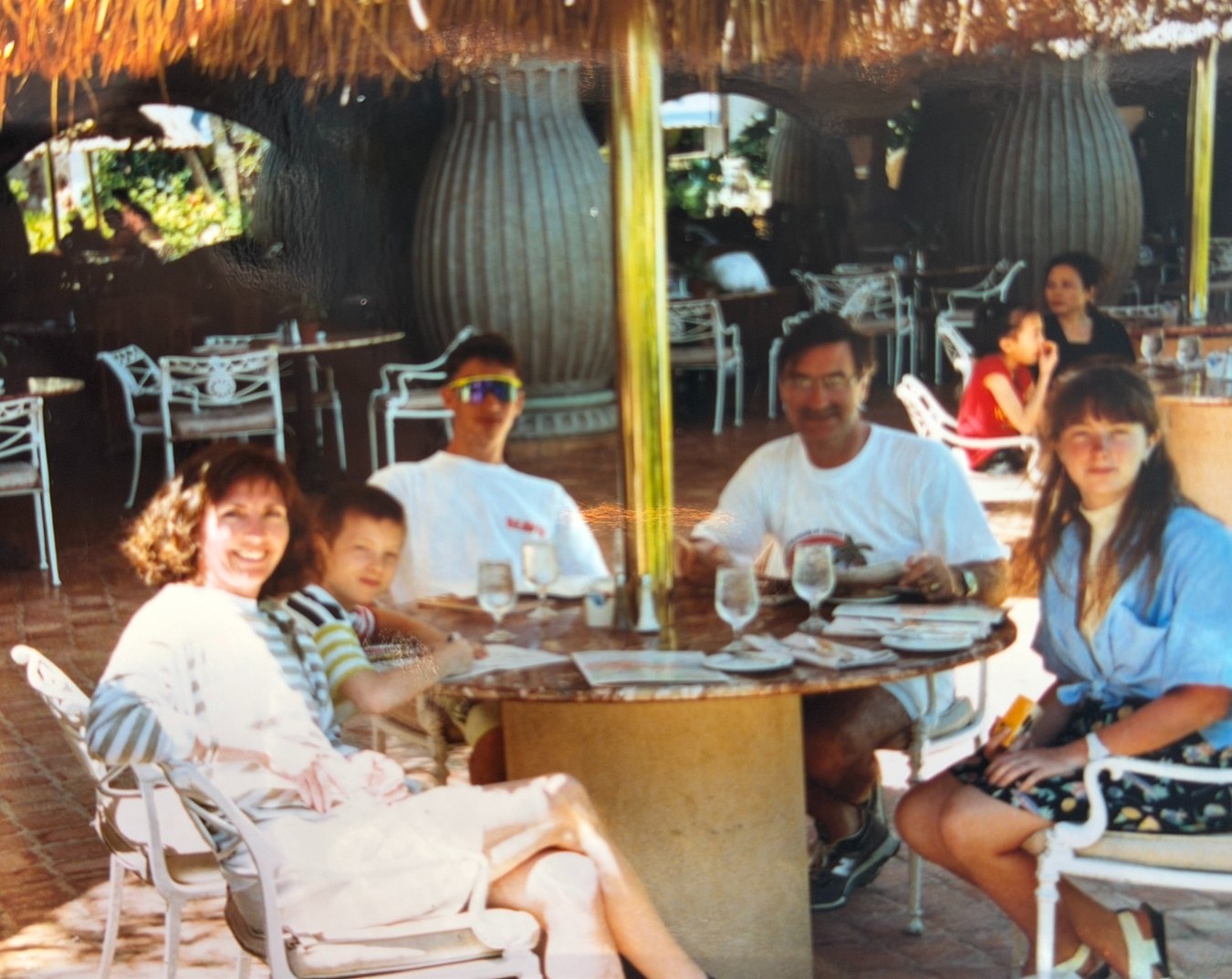
Being out west allowed for an easy visit to Hawaii, which we enjoyed.
I also got into golf on a routine basis. In fact, in the summertime we could leave the office on Fridays at 11 a.m. be on the golf course by 12:30 p.m. and play for four hours or so. I played in a regular foursome which included my right-hand-man in MOCAN and his son. With this routine I actually became somewhat competent. It’s strange to me how golf seems to be an intrinsic part of oilmen’s socializing. There are multiple examples of how golf and business seemed to go hand-in-hand.
In Canada there was an annual event called “The Oilmen’s Tournament”. Attendance was limited to senior executives from the oil companies, and the service companies provided the prizes and the gifts. In the US there were 2 or 3 Mobil corporate meetings a year which were held in southern California or Arizona so that golf was assured in the afternoons. There is still an annual golf get-together for my Mobil E&P executive retiree buddies. I used to participate until fairly recently.
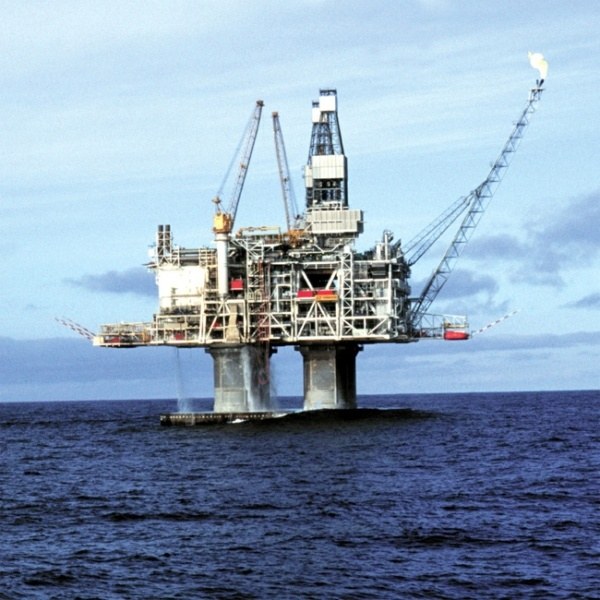
The next part of the Canada story, the wrangling over the Hibernia oilfield, could probably command a chapter to itself, but I’m going to see if I can get the gist across in a more compact form! The Hibernia oilfield was discovered by Mobil around 1979. It’s about 300 km from St. John’s, Newfoundland in 80 meters of Atlantic water. In 1982 it was the scene of a major tragedy when the Ocean Ranger drilling rig working for Mobil sank in a storm with the loss of all 84 hands. Commercializing the oil field in this hostile environment in the middle of iceberg alley proved to be extremely challenging. The pressure to get on with the project was intense when I arrived in Calgary.
There are really three strands to the story: —Project owners’ politics —Canadian politics —Project economics The PROJECT OWNERS were Mobil, Chevron, PetroCanada and GulfCanada. Mobil was the Operator responsible for communicating with governments and partners and coming up with a plan to develop the field. PetroCan was the national oil company of Canada and so reported to the federal energy minister. It was difficult to come up with a strategy to extract value from negotiating with the government when your partner was a conduit back to that very entity. Gulf Canada had a very strange history and was as much an asset-trading vehicle as it was an oil company. It was essentially owned by the Reichmann brothers of Montreal who also owned O & Y, a real estate company, which was the original developer of Canary Wharf in London. When oil prices dropped and London property turned down in 1992, O & Y, and hence Gulf Canada, faced financial collapse. As a result, they were a very distracted and unreliable partner.
Once acceptable economic terms had been secured for the project from the two governments (Canada and Newfoundland) a further row broke out amongst the partners because Mobil, afraid for the reputational damage that might ensue if an iceberg were to hit an offshore oil facility, refused to continue in the role of operator. Only Chevron or Mobil had the staff and skills to manage Hibernia but Chevron wouldn’t take over and Mobil wouldn’t proceed. The other two partners were furious with the big Americans and the governments weren’t too happy either.
Ultimately Mobil formed a company, HMDC, to do all the work and be the public face of the consortium and the four shareholders were free to second people into the organization.
Mobil provided most of the senior executives into HMDC. I had to chair the very frequent partner meetings and man, was that a pain—herding cats wasn’t in it.
As it happened, CANADIAN POLITICS at that time were also very fractious. Quebec was threatening to pursue a path leading to independence. The Federal government under Prime Minister Brian Mulroney was anxious to hold Canada together. They devised a number of constitutional amendments in a draft Accord, giving more powers to the provinces and recognizing Quebec as a “distinct society.” To enact these initiatives required the approval of all ten provinces. Unfortunately, the Premier of Newfoundland, Clyde Wells, disagreed with some of the proposed provisions and then held Hibernia hostage so that the federal government, which very much wanted the project to proceed, would accommodate his wishes. I was the meat in this sandwich as a sort of go-between between the Feds and the province. I commuted a lot to both Ottawa and St. John’s, Newfoundland, and spent hours on the phone with both sides.
And NY HQ had to be constantly informed and mollified and the project partners kept on side. It was a bruising business. By the middle of 1990 the Mulroney initiatives to mollify Quebec’s flirting with independence had been endorsed by 8 of 10 provinces and 96% of the population, but failed to become law due to Newfoundland and Manitoba not supporting the Accord.
At that, Newfoundland’s hindrance of Hibernia ceased because they had got their way. Now all that was needed was acceptable economics and a tolerance for very high risk and we could proceed.
PROJECT ECONOMICS to allow the development to proceed were exceptionally difficult to quantify due to Hibernia’s location in an area of the Grand Banks lashed by storms and hurricanes and prone to fog, rogue waves and frequent icebergs (I’ve seen icebergs sitting in the middle of the small harbor of St. John’s).
There were new challenges for the engineering of a safe development solution. On top of that, there was some trepidation with respect to the quality of the oil reservoir and therefore with estimation of the individual well flow rates and the ultimate recovery that might be expected. All of this meant that the economics were never robust. No one had ever placed a structure in a location where it could be knocked over by an enormous iceberg. In a way, the design alternatives became moot when Newfoundland mandated that a giant concrete structure should be used. This lo-tech solution meant that the platform could be built in Newfoundland using thousands of local unskilled labourers (mostly pouring cement).
A development plan had been approved at the beginning of 1986, but then oil prices collapsed and the project was shelved while extensive negotiations took place between the partners and both governments regarding fiscal and financial considerations.
Finally, after much toing and froing, a binding agreement was negotiated and was signed with much ceremony in September 1990. I was in St. John’s to sign for and represent the partners at the big event which was broadcast coast-to-coast on Canadian TV, and during which, I had a starring role. What nobody knew was that the previous night the project nearly folded when I got a phone call from Prime Minister Mulroney telling me that the contract for the topsides design (worth about $200 million) had to go to a Montreal company. Mobil does business by competitive tendering, not by direct award which was anathema to them. But I was so fed up by this stage that I just said “sure”.
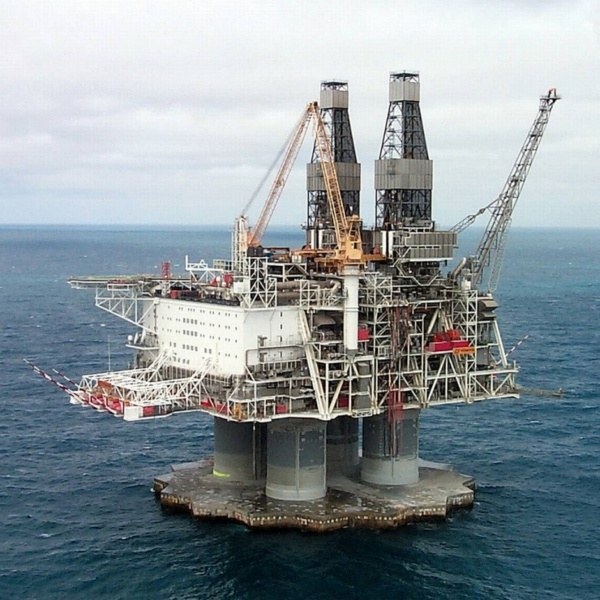
Although I was long gone from Mobil by the time the Hibernia structure was built, I was sorry not to be around when the biggest oil platform in the world was towed out and placed on the ocean floor in May 1997.
It weighs 590,000 tonnes and 450,000 tonnes of ballast were placed inside it.
Production commenced in November 1997, and although initial estimates were that the field would be lucky to recover 450 million barrels of oil, by 2016 it had produced its billionth barrel.
It’s still producing today, in 2025, and is anticipated to continue until around 2040. It has certainly surprised on the upside!
Aside from Hibernia and other organizational issues, in 1989 I had another major concern. Mammy had been hospitalized in Mount Carmel hospital in July 1988, and I think was released after some tests. Nonetheless, it was very concerning for us.
Without really having a firm diagnosis, she essentially went slowly downhill during 1989. She was hospitalized again in May 1989. I think she and her medical professor got on very well, and he very much enjoyed stopping into her hospital room for a chat each day. She was very pleased when he told her that despite being a lifelong smoker, her lungs were in excellent condition. I did get home in the first half of the year to see her, which was a very good thing. The family kept me abreast of her failing health by fax (the forerunner of email). And then later in the year, her medical team assessed that the end could not be far off. At the same time Bombardier of Canada wanted to sell MOCAN through me an executive jet, so as a demo they offered to fly me anywhere I liked. It sounds crazy but I said “Dublin” and they said, “Sure.”
So I did fly all alone to Dublin in November ’89, and Mammy was given a break from the hospital. I spent quality time with her outside of the clinical environment including an afternoon walking around the beautiful grounds of the War Memorial Gardens along the River Liffey at Islandbridge. An amusing tale to go along with the visit was Dermot regaling Mammy with stories of John flying into Dublin in his corporate jet. I’m sure it helped to take her mind off her medical challenges. However, it may also have had the unfortunate effect of prolonging her suffering from her extensive cancers.
In the event, and despite her terminal illness, Mammy kept going through the whole of 1989 and in to 1990. She surprised her medical team with her endurance thanks to her iron will and the full support and love of all her kids. She spent her final weeks in a hospice near her home and undoubtedly “did not go gentle into that good night”. She passed away in January 1990 and I was able to be at her wake and to be part of the cortège from Dublin to Collon, where she was buried.
Finally, in this period (probably 1990) I was approached by an executive recruiter to see if I would consider taking a job “down under” in a company called BHP. I did fly down to Melbourne, was treated royally by BHP, but despite their best endeavours I could not come to terms with the very 1950s appearance of the people (think frocks, twin sets & pearls) and the clearly Victorian era nature of the built environment. It was just depressing and I couldn’t get out of there fast enough.
By October 1990, the job was significantly less demanding, the family was settled, and in anticipation of the coming ski season, we outfitted the whole family with new ski gear. It was destined never to be used in Canada.
Continue Reading
1990–1991
Fairfax, VA
My job in Calgary was really the last time I held a conventional line management job in Mobil, i.e. chief executive of a large, integrated profitable production company. Mocan, was one of ten companies in the E&P Division.…