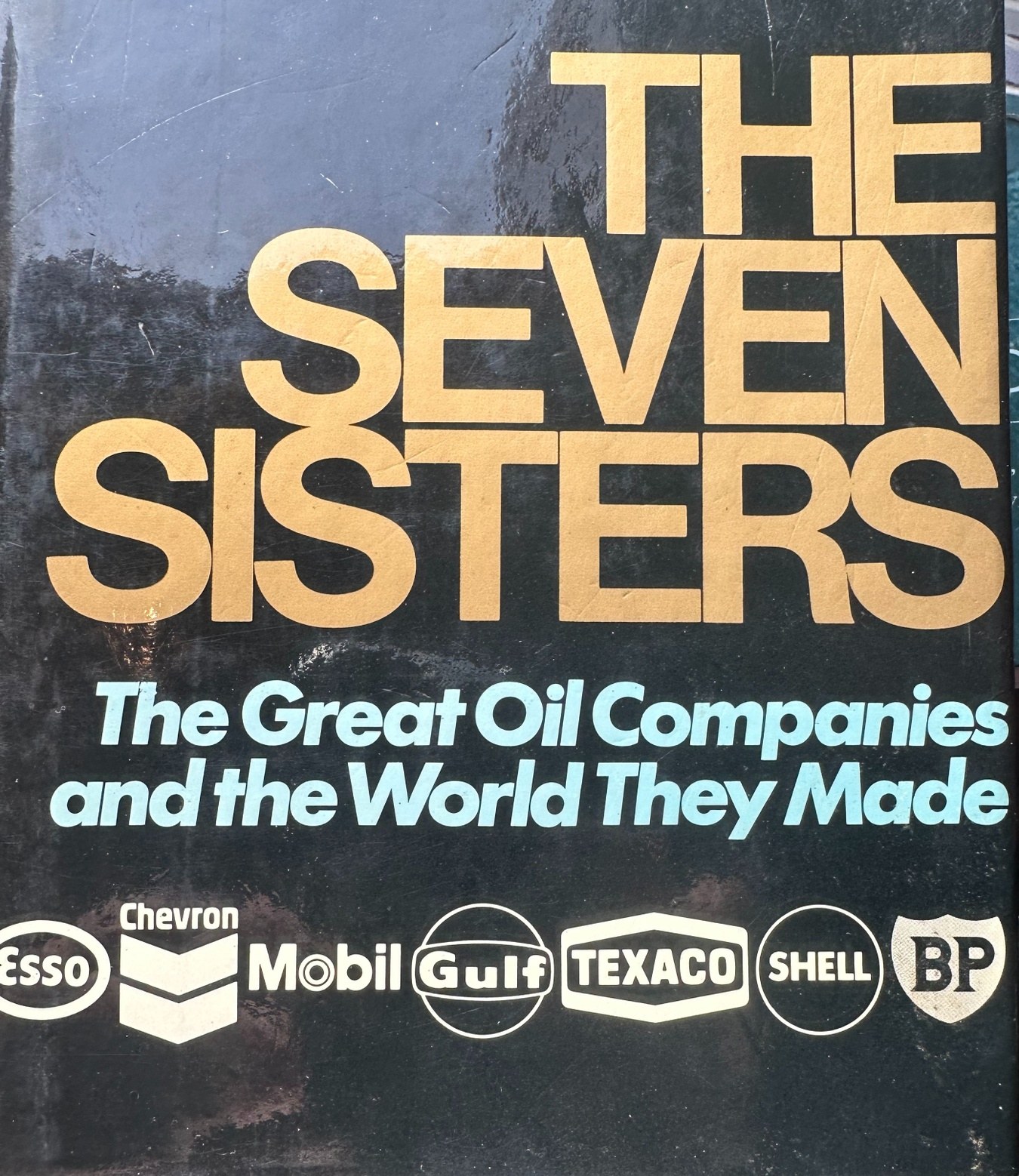
To gain a better understanding of the next trajectory of my career I think it would be helpful to have an overview of how the oil business is structured.
Although bitumen from surface seeps was known and used for various purposes since prehistory, especially in the Middle East, it was the decline in the supply of whale oil in the 1850s due to overfishing that led to the modern oil industry becoming the preferred source of oil for illumination. In 1859, the first successful oil well was drilled by Drake in Pennsylvania. The chaotic competition by hundreds of entrepreneurs which soon followed prompted the emergence of John D. Rockefeller and his establishment of the Standard Oil Company in 1870. He shaped the form of the modern oil industry from the wellhead to the end uses. In the process, he became the richest man in the world.
Standard Oil was broadly hated in the US during the time of the “Robber Barons” of the late 19th and early 20th centuries.
Finally, as a result of public pressure, the US Supreme Court, in 1911, ruled that Standard Oil should be broken up into a multitude of independent companies. Some of these successors became today’s well-known enterprises such as Exxon (Standard Oil of New Jersey), Mobil (Standard Oil of New York), Chevron (Standard Oil of California), etc. During this time both BP and Shell had been established and Texaco, Gulf Oil and Unocal soon followed on the back of huge new discoveries in Texas and Oklahoma. The biggest of these companies became known as “The Seven Sisters.”
They were suspected of, and maybe they were found to be, colluding against the producer countries.But this American dominance did not go unchallenged. The Nobel brothers helped create the Russian industry in Baku and an Irishman, William Knox D’Arcy secured in 1901 a sixty-year concession covering most of the Persian Empire, thus establishing the business model for companies and host countries to work together in oil ventures. Elements of this model continue to this day.
The process of creating value in the oil industry is normally segmented into acquiring and producing the crude oil (the Upstream) and then selling the constituent products (the Downstream). The Upstream is called Exploration and Production (E&P) and the Downstream is called Refining and Marketing (R&M). The skills and qualifications required by each of these four undertakings are quite distinct and not interchangeable.
Explorers are responsible for identifying prospective regions (say Saudi Arabia in the 1930s for example). Negotiators then seek to acquire concessions from the host countries. After this the Explorers then drill “wildcat” wells and, if successful, the Producing people move in and create and construct effective exploitation infrastructure—wells, pipelines, and export facilities. Oil fields are typically designed to have 40-plus years of production. The discipline responsible for this work is Petroleum Engineering and that’s what I became. I once asked a manager in Mobil Libya how come they hired me, a Mechanical Engineer, for this work. The answer I got was “if you can qualify as an Engineer, we can make you a Petroleum Engineer!”
Continuing the oil value chain, the crude is sent to a refinery where all the products we know, from gasoline to wax, are manufactured. Finally, marketers sell the different products to the end users. As an example, I mentioned in the chapter “All Change” above that after I was kicked out of Libya, Mobil offered me a job selling marine bunker fuels to Greek shipowners!
The four disciplines Exploration, Production, Refining and Marketing are all separate fiefdoms. There is never any employee movement between them because the skills required by each are so different. Typically, one top exec will run the combined E & P and one will run the R & M Division.
I’ve laid all this out because as we will see I did move out of my “home” Division of Production, and it never really dawned on me why this might be happening.


















Continue Reading
1988
New York 1988
My new appointment in the New York head office was called GM, International Negotiations and Acquisitions. Much to my surprise, the job was in the Exploration Division. As I noted above, this was one of two arms of the whole E&P (Exploration & Production) business.…