I don’t really know why, but when I flew to Abu Dhabi at the end of December 1970, I had to start on a solo, bachelor basis.
Arrival at the airport was reassuringly different than the hateful transits of Tripoli, Libya. The locals were polite and welcoming!
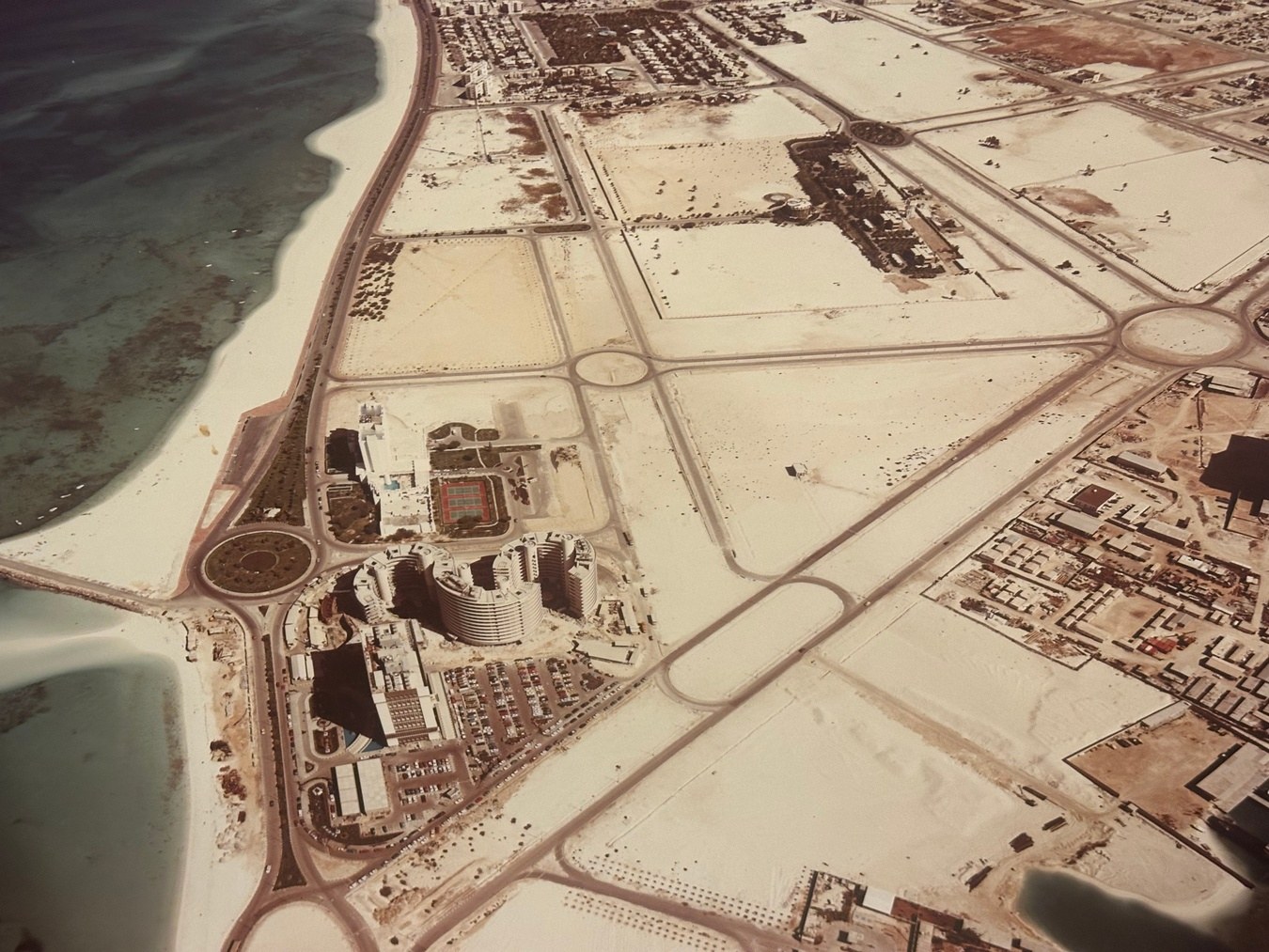
Abu Dhabi Office and housing c.1972 There was a company housing compound beside the office which was beside the sea. There may have been 16 houses in it. See the cluster at bottom left in the previous photo.
One of them, a three-bedroom house, was given over to bachelors. Initially I had one of the bedrooms, another occupied by a dour young Frenchman and the other by an old Raj type who wandered about in voluminous khaki shorts. The house was called a “chummery,” the first of my “Anglo learnings,” while the currency was the Indian rupee! Next evening I was invited to the Operations Manager’s house for New Year’s Eve, where I became, because I was first over the threshold, “First Footer.”
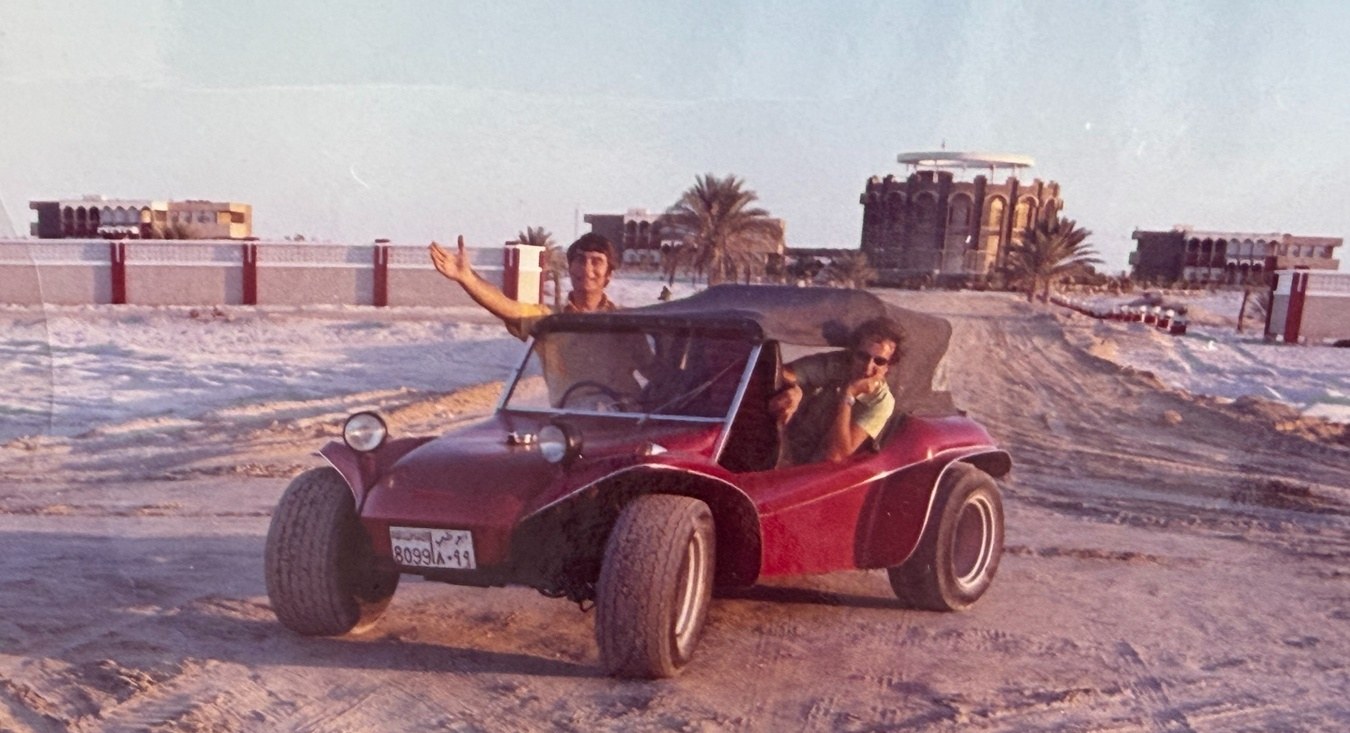
This was my first experience of this Scottish tradition of having a dark-haired male be the first to cross the threshold to welcome in the New Year.
The oil company was called Abu Dhabi Petroleum Company (ADPC) and was a “sister” of IPC, the Iraq Petroleum Company.
Its owner shareholders were Shell, BP, Total and Exxon, and Mobil. And of course Mr. 5%, Nubar Gulbenkian, a wily Armenian who had negotiated the access to Iraq for the oil companies. Apparently IPC had been of major benefit to the UK after WWII by constructing major pipelines, ports and refineries in the Middle East with all contracts and workers coming from the British homeland.
There were about 25 expatriates and one Arab in the office. The Arab was a nice old guy who wandered about all day in his dishdasha, or long white robe, with two tiny cups and a silver Arabic coffee pot. He offered the coffee and it was a ritual which required drinking three cupfuls.
Most of the more senior people had come down from Iraq, but the younger folk were direct hires from England, predominantly Oxbridge. As I was soon to discover, the bulk of the work was done in the oilfield by a large number of Indians (skilled) and Baluchis (laborers from Baluchistan). The currency was the Indian Rupee, the region was called the Trucial States and the company vibe was very much “Indian Raj”. By the way, my salary was around £1,400 a year, but the benefit was that there was no living cost in AD so the salary was savable! I can’t quite remember the vacation entitlement, but I believe it was generous and was derived from the time it used to take for steamers in the pre-war years to travel to and from Lebanon from the UK.
Abu Dhabi town is on an island which was bridge connected to the mainland. What was there? Mainly just sand. There was one blacktop road, recently constructed, which happened to run from the ADPC office to the airport and on to the bridge. The ruler, Sheikh Zayed, lived in an old mud-walled fort. There were 2 four-story commercial buildings, two small markets with imported goods, two discrete booze outlets and the souq or local market. There was also an apartment building where I was destined to get a flat and some privately built houses. But, all in all, this was a very desolate backwater at that time. There were really no retail shops until about a year or so after I arrived. I remember the pleasure of being able to buy a stereo system when the first importer set up shop.
As more people were being brought into the town there was a real shortage of housing, which was probably the reason Liz could not travel out with me.
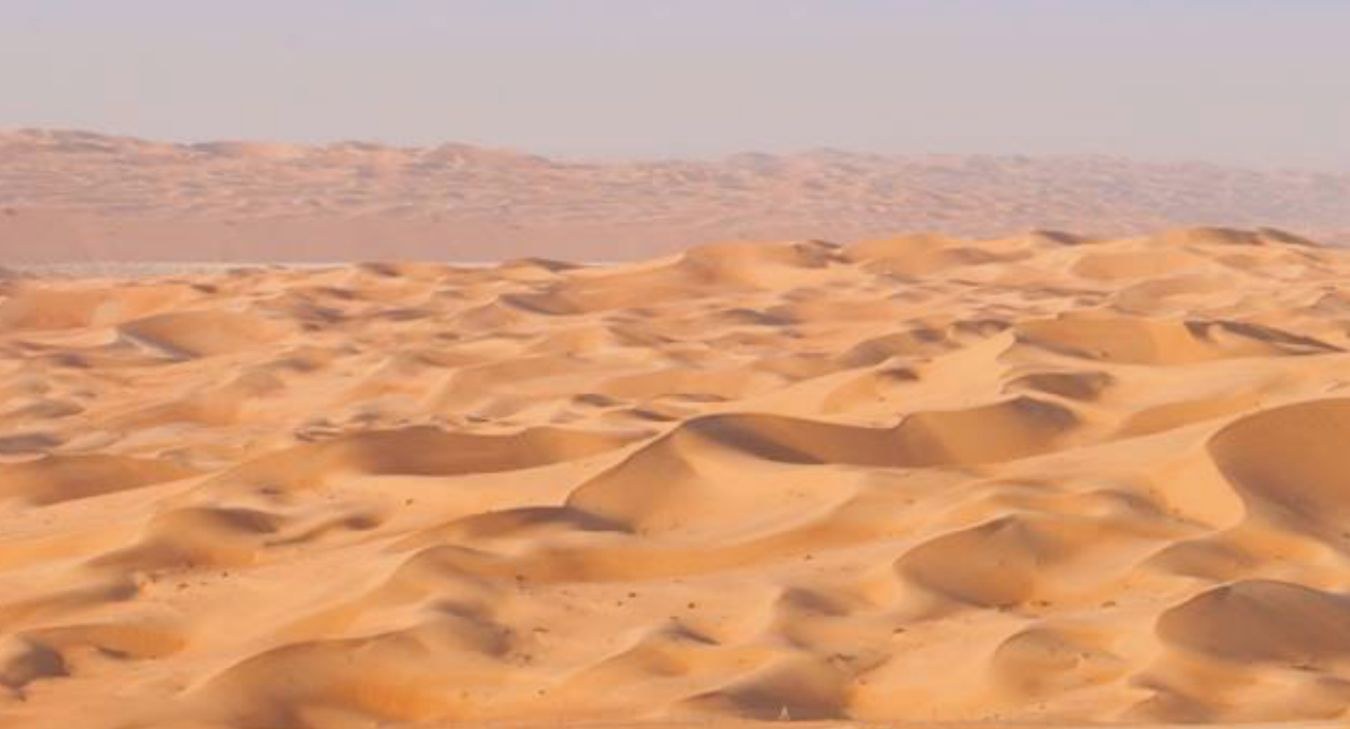
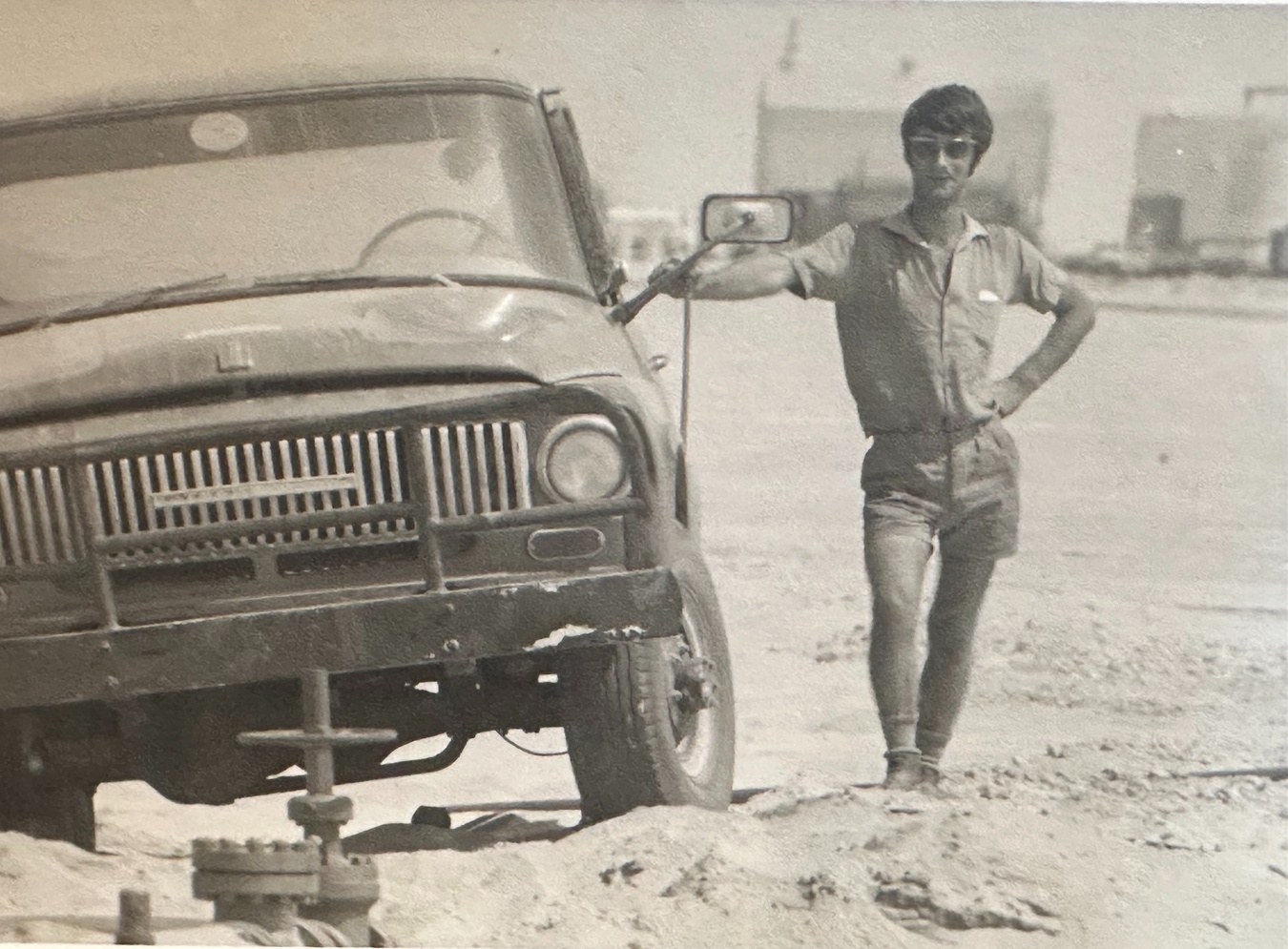
Apparently I was recruited as a Drilling Engineer, so my job was deep in the desert. We got there by flying to a company base along the coast about 45 minutes flying time away. I believe the small plane we used was actually built near Belfast in Northern Ireland. From there it was Land Rover through the sand dunes for about another hour to reach the area being actively drilled. In contrast to the flat desert of Libya, this was a completely different proposition. The dunes were huge and grew larger as one slogged southward into the Empty Quarter. It was dangerous, and people had died of sunstroke after their vehicles had become stuck in the sand. It was important to learn how to drive up the shallow side to the top of these monsters and then slalom the truck down the steep slip-face on the reverse side.
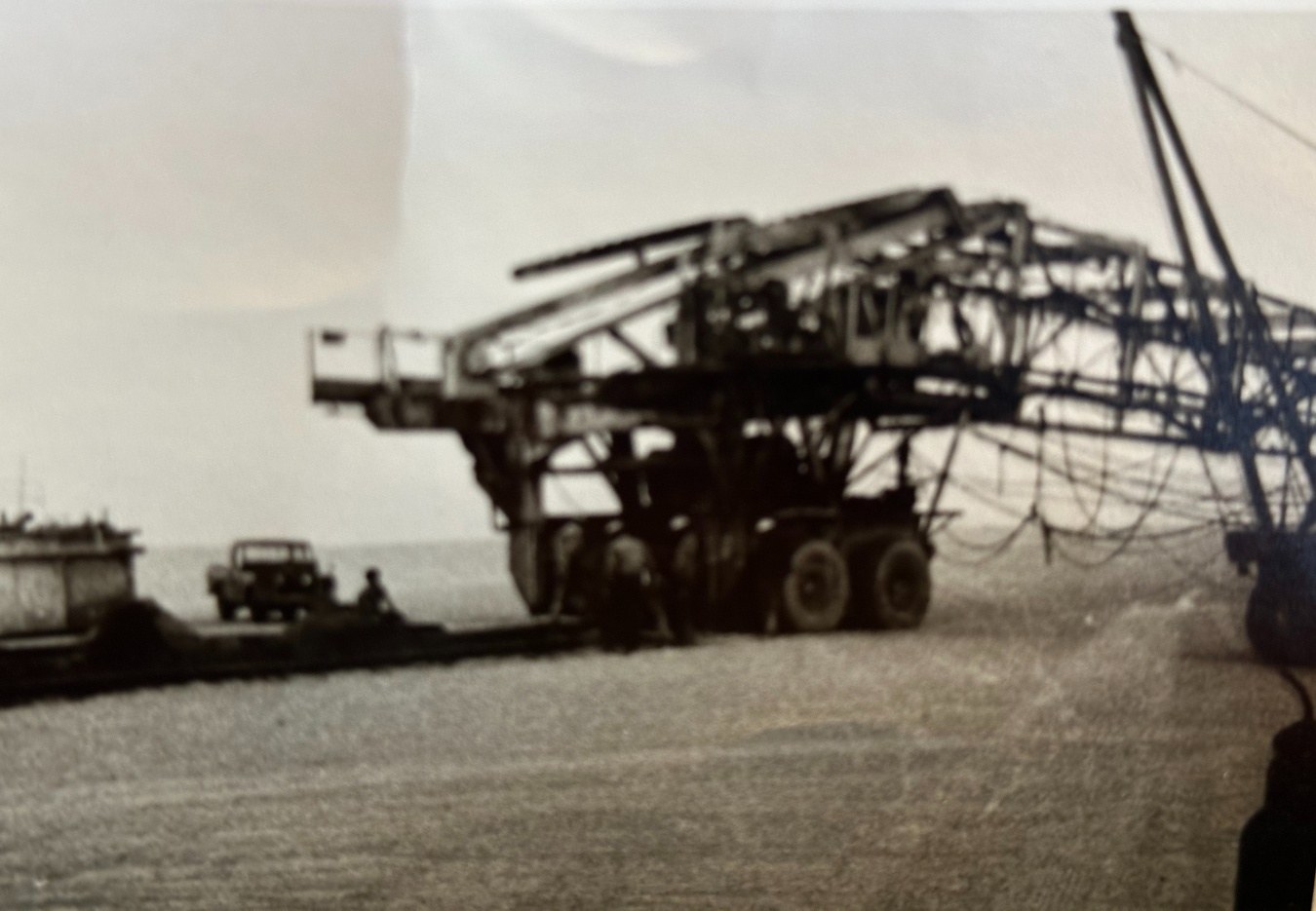
Another stark contrast with Libya, where all my colleagues were American, and pre-Gaddafi we had worked our asses off, now everyone was English and the slow pace of work was excruciating. They used to shut down the drilling rigs for afternoon tea—an absolute “no no” for Mobil.
One of the amazing contrasts between oil fields in Libya and Abu Dhabi was the difference in well productivity. Typical well rates in Libya were less than 1,000 barrels per day (b/d). In Abu Dhabi they could flow as much as 70,000 b/d! No wonder Middle-East oil possessions were so highly prized.
After a few rotations in the desert, I was assigned housing and Liz came out. Another new experience was setting up our first home without the normal family support. The real advantage of the location was that it was in an apartment above one of the booze suppliers. I could just call the order down, and up would come a bearer with the order. Because of the Islamic ban on alcohol it was believed inappropriate to charge a tax on it, so a bottle of whiskey cost $1. Needless to say there was a significant amount of drinking. There were some six young couples in ADPC by this time and a couple of others with service companies. We had lots of parties in the apartment. In addition to frequent dinner parties, there was also Bridge card playing and occasional tennis. One of the surprising things was the working hours.
These were 7 a.m. to 2 p.m., six days a week with Friday off. It was said that the first general manager of ADPC was a sailor who noticed that winds picked up in the afternoon, and so set the office hours to allow him to sail! Strangely, these hours became the standard for all government and commercial offices in Abu Dhabi. And so, I took up sailing at the weekends. There actually was a sailing club with a dozen or so 420 dinghies.
A sister company of ADPC was QPC, the Qatar oil company. It had been producing a much smaller resource for longer, and so its oilfield was in decline. However, there was some interaction between the two companies. This led to an invitation to compete in a sailing match in Dukhan on the west coast of the Qatar peninsula against the QPC team. The two abiding memories I have of the sailing weekend were the rundown and desolate nature of the country, including the capital, Doha (think The Last Picture Show), and how scared I was while leaning out of the yacht during racing only to have multiple poisonous sea snakes raise their heads around me. I learned later that the British Museum defines the sea snakes in this area as among the most deadly in the world!
Being away in the desert for weeks on end was trying for a newly married couple. One day while I was away, Liz was dressed for a small fancy dress party and had a problem with her car. I had bought an Austin A40 from someone leaving. A piece of junk but all that was available at the time. There were no car dealerships.
An Indian man, I think, offered to help her back to the apartment. It turned out she had to fight off his advances and as a result she told the office that I had to come in from the desert.
They brought me in permanently and I took up a new job in the office. Some time after that Liz began a job with a Lebanese contractor named Joe who was larger than life and drove around the sands of Abu Dhabi in a monster Cadillac. He was a good friend, very helpful, and very generous. Joe Chamieh was pleased eventually to become Pierce’s Godfather.
And speaking of cars, while on leave at home I bought my first new car, a white MGB GT which we picked up from the factory in England and drove back as far as Qatar—stopping there because there was no road onward to Abu Dhabi! Crossing the Saudi desert from Syria was in itself a major undertaking made somewhat unpleasant when, after crossing into Saudi—thirsty, covered in dust, and sweaty (no air conditioning)—the Saudi Border Guards wouldn’t let Liz step out of the car! At that, she said, you’re never going to accept an assignment to work in Saudi Arabia. We got the car as far as Doha, Qatar, from where it had to go by sea on the deck of a local dhow to Abu Dhabi. A problem then arose, because the Arab states had a boycott on British Leyland products. After a couple of months, Joe somehow managed to get it shipped and imported. Later on I was in Houston, found a kit to bolt on an air conditioner for the MGB and managed to successfully fit it. Bliss.
Around about this time the company leased a number of houses and one, a two-bedroom unit was allocated to us. It was called House X and was just around the corner from the office and next to the little “supermarket.” Once we had it organized, Liz’s mom, sister, and nephew came to stay. By this stage I, along with two other guys (Mike and Simon), had imported a speedboat, so we used to spend a lot of time on a nearby sand spit island. We became exceptionally good water skiers, but mostly it was a way of staying somewhat cool and drinking lots of beer. Mind you, there were some days it was so hot that it was impossible to touch the boat without getting burned.
By contrast, during our holidays at home we did cool things like skiing in Austria and going by canal barge on the Shannon with John and Maureen Sheridan. The barge carried a little sailboat which was fun to sail on the lakes. We also made a couple of visits to Beirut and south Lebanon, once visiting Joe’s family in Sidon. Several times we went overland on safari to the Indian Ocean by Land Rover with friends. There were no roads and the track eventually led through the Oman mountains along spectacular gullies and ravines. I remember once we stopped for a break and a number of fully garbed local women came up to Liz and touched her face and hands. They had never before seen a white woman.
So, the first three or so years in Abu Dhabi were really adventurous and exciting. We had mostly English colleagues with a Raj overlay; we were witness to an amazing Bedouin culture; had the ability to travel to a variety of destinations and a work environment that was less than demanding. At times the lack of Western cultural opportunities grew a little tiresome but we did make our own fun. It’s no wonder my mother said, “Be sure you enjoy this unique experience, because it won’t last.”

Continue Reading
1974–1977
The Worm Turns
Why is 1974 picked out as a key date for me in this story? It was picked because it’s one of two years when events in the oil industry had a global impact. And of course, in addition to impacting worldwide economies, it greatly influenced the career path of people working in the industry.…